Foresight: Bedeutung, Methoden und Nutzen einfach erklärt
Foresight begegnet einem heute in Stellenanzeigen, Strategiepapieren und Innovationsabteilungen. Doch was steckt hinter dem Begriff? Dieser Artikel erklärt die Bedeutung von Foresight, grenzt ihn von Prognose und Trendforschung ab und zeigt, mit welchen Methoden Organisationen vorausschauend arbeiten.
Das Wichtigste in Kürze
- Foresight bedeutet wörtlich Weitsicht oder Vorausschau.
- Als Fachbegriff steht es für die systematische Auseinandersetzung mit mehreren möglichen Zukünften.
- Ziel ist nicht die richtige Vorhersage, sondern die bessere Entscheidung heute.
- Zentrale Methoden: Horizon Scanning, STEEP-Analyse, Szenariotechnik, Delphi, Backcasting, Roadmapping.
Was bedeutet Foresight?
Foresight stammt aus dem Englischen und bedeutet wörtlich übersetzt Weitsicht, Voraussicht oder Vorausschau. Das Gegenstück ist hindsight, also die Rückschau im Nachhinein.
Im deutschsprachigen Raum wird der Begriff meist nicht übersetzt, weil er inzwischen als Fachbegriff etabliert ist. Gemeint ist dann kein persönliches Talent, sondern ein strukturiertes Vorgehen:
Kurzdefinition: Foresight ist die systematische Auseinandersetzung mit möglichen Zukünften, um daraus heute bessere Entscheidungen abzuleiten.
Entscheidend an dieser Definition sind zwei Punkte. Erstens der Plural: Foresight fragt nicht nach der Zukunft, sondern nach mehreren denkbaren Entwicklungen. Zweitens der Gegenwartsbezug. Ziel ist nicht, die Zukunft korrekt vorherzusagen, sondern die eigene Handlungsfähigkeit zu erhöhen.
Wortherkunft und Verbreitung
Das Wort setzt sich zusammen aus fore (voraus) und sight (Sicht) und ist im Englischen seit dem Mittelalter belegt. Als Fachbegriff verbreitete es sich ab den 1970er Jahren, als Japan begann, regelmäßig nationale Delphi-Studien zu Technologieentwicklungen durchzuführen. In den 1990er Jahren folgten staatliche Foresight-Programme in Großbritannien, Deutschland und auf EU-Ebene. Seither hat sich der Ansatz von der Technologiepolitik in Unternehmen, NGOs und Verwaltungen ausgebreitet.
Zwei Bedeutungsebenen
Je nach Kontext meint Foresight etwas anderes:
- Alltagssprachlich beschreibt Foresight eine Eigenschaft von Menschen. Wer Foresight besitzt, denkt voraus, erkennt Konsequenzen früh und trifft entsprechend Vorkehrungen.
- Fachlich bezeichnet Foresight eine Disziplin mit eigenen Methoden, Rollen und Prozessen. Sie ist Teil der Zukunftsforschung und wird je nach Anwendungsfeld näher bestimmt: Strategic Foresight, Corporate Foresight, Technology Foresight oder Policy Foresight.
Foresight, Prognose und Trendforschung im Vergleich
Die Begriffe werden häufig vermischt, meinen aber Unterschiedliches.
| Ansatz | Leitfrage | Zeithorizont | Ergebnis |
|---|---|---|---|
| Prognose / Forecasting | Was wird am wahrscheinlichsten eintreten? | kurz- bis mittelfristig | eine Zahl, ein Wert, ein Korridor |
| Trendforschung | Welche Entwicklungen sind bereits sichtbar? | laufend | beschriebene Trends und Muster |
| Foresight | Was könnte alles eintreten und was bedeutet das für uns? | mittel- bis langfristig | mehrere Zukunftsbilder plus Handlungsoptionen |
| Vision | Welche Zukunft wollen wir erreichen? | langfristig | ein angestrebtes Zielbild |
Eine Absatzprognose für das kommende Quartal ist Forecasting. Die Frage, wie das eigene Geschäftsmodell in zehn Jahren unter vier sehr unterschiedlichen Rahmenbedingungen aussehen müsste, ist Foresight.
Strategic Foresight und Corporate Foresight
Strategic Foresight verbindet Zukunftsarbeit direkt mit der Strategieentwicklung. Die Erkenntnisse fließen in Portfolioentscheidungen, Investitionen und Risikomanagement ein, statt in einer Studie zu enden.
Corporate Foresight bezeichnet die dauerhafte Verankerung dieser Arbeit im Unternehmen, etwa durch ein eigenes Team, ein Trendradar oder feste Formate im Führungskreis.
Studien zur Zukunftsfähigkeit von Unternehmen zeigen ein wiederkehrendes Muster: Organisationen, die Umfeldveränderungen früh erfassen und intern anschlussfähig aufbereiten, reagieren schneller auf Marktbrüche als Wettbewerber ohne solche Strukturen.
Warum Foresight an Bedeutung gewinnt
Mehrere Entwicklungen erhöhen den Bedarf an vorausschauendem Arbeiten:
- Kürzere Innovationszyklen, besonders durch Künstliche Intelligenz und Automatisierung
- Regulatorische Dynamik, etwa bei Nachhaltigkeit, Lieferketten und Datenschutz
- Geopolitische Unsicherheit mit direkten Folgen für Beschaffung und Absatzmärkte
- Demografischer Wandel und veränderte Erwartungen an Arbeit
- Klimawandel mit physischen und transitorischen Risiken
In solchen Umfeldern verliert die Fortschreibung der Vergangenheit an Aussagekraft. Genau dort setzt Foresight an.
Die wichtigsten Foresight-Methoden
Horizon Scanning
Systematisches Beobachten von Signalen aus Wissenschaft, Politik, Technologie und Gesellschaft. Ziel ist es, schwache Signale zu erfassen, bevor sie zum Trend werden.
STEEP-Analyse
Strukturierung des Umfelds nach den Dimensionen Society, Technology, Economy, Ecology und Politics. Sie verhindert, dass die Analyse auf die eigene Branche verengt wird.
Szenariotechnik
Die bekannteste Foresight-Methode. Aus den zentralen Unsicherheiten werden meist drei bis vier in sich stimmige Zukunftsbilder entwickelt, die anschließend gegen die eigene Strategie getestet werden.
Delphi-Befragung
Mehrstufige, anonyme Expertenbefragung. Nach jeder Runde erhalten die Teilnehmenden die aggregierten Ergebnisse und können ihre Einschätzung überdenken.
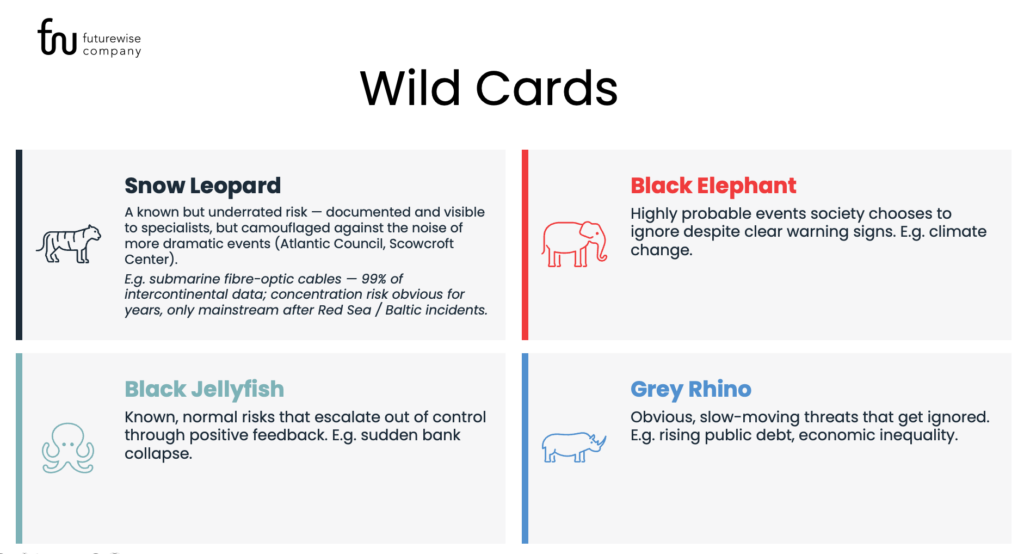
Wild Cards und Schwarze Schwäne
Ereignisse mit geringer Eintrittswahrscheinlichkeit und großer Wirkung. Sie werden bewusst durchgespielt, um blinde Flecken sichtbar zu machen.
Backcasting
Der Weg führt vom Zielbild rückwärts in die Gegenwart. Die Frage lautet: Was müsste bis wann geschehen sein, damit dieser Zustand eintritt?
Roadmapping
Übersetzt Zukunftsbilder in konkrete Meilensteine für Technologie, Produkt und Kompetenzaufbau.
Wie ein Foresight-Prozess abläuft
- Rahmen setzen. Entscheidungsfrage, Zeithorizont und Betrachtungsfeld festlegen.
- Scannen. Signale, Daten und Expertenwissen sammeln.
- Analysieren. Treiber und Unsicherheiten identifizieren und bewerten.
- Zukünfte entwerfen. Szenarien oder Zukunftsbilder ausarbeiten.
- Ableiten. Strategische Optionen, Frühindikatoren und nächste Schritte definieren.
Der fünfte Schritt entscheidet über den Nutzen. Ohne Anbindung an reale Entscheidungen bleibt Foresight ein Workshop-Erlebnis.
Typische Fehler
- Foresight als Vorhersage missverstehen und am Ende nur ein Szenario weiterverfolgen
- Zu kurzer Zeithorizont, der die Analyse auf bestehende Planungen zusammenschrumpfen lässt
- Ausschließlich interne Perspektiven einbeziehen
- Ergebnisse dokumentieren, aber keine Verantwortlichkeiten und Frühindikatoren festlegen
- Den Prozess einmalig durchführen statt regelmäßig zu aktualisieren
Häufige Fragen zur Bedeutung von Foresight
Was bedeutet Foresight auf Deutsch?
Foresight bedeutet Weitsicht, Voraussicht oder Vorausschau. Als Fachbegriff steht es für die systematische Beschäftigung mit möglichen Zukünften.
Was ist der Unterschied zwischen Foresight und Forecasting?
Forecasting berechnet die wahrscheinlichste Entwicklung einer Größe. Foresight arbeitet mit mehreren möglichen Zukünften und fragt nach den Konsequenzen für das eigene Handeln.
Ist Foresight dasselbe wie Zukunftsforschung?
Zukunftsforschung ist der übergeordnete Begriff für die wissenschaftliche Beschäftigung mit Zukunft. Foresight bezeichnet die anwendungsorientierte Praxis innerhalb dieses Feldes.
Was macht ein Foresight Manager?
Er beobachtet das Unternehmensumfeld, moderiert Szenario- und Strategieprozesse, pflegt Trendradare und übersetzt Erkenntnisse in Empfehlungen für die Führungsebene.
Für welche Organisationen lohnt sich Foresight?
Für alle mit langen Investitionszyklen, hoher Regulierungsdichte oder schnellem technologischem Wandel. Kleinere Organisationen können bereits mit einem schlanken Trendradar und einem jährlichen Szenario-Workshop starten.
Fazit
Die Bedeutung von Foresight lässt sich auf eine Formel bringen: nicht die Zukunft vorhersagen, sondern auf mehrere Zukünfte vorbereitet sein. Wer Umfeldsignale strukturiert erfasst, in Szenarien übersetzt und daraus überprüfbare Handlungsoptionen ableitet, verschafft sich Reaktionszeit. Genau darin liegt der praktische Wert dieser Disziplin.