What Shell Knew Before the Crisis Hit

When the oil crisis struck in 1973, most companies were caught flat-footed. Shell wasn’t. They’d already spent two years thinking through how they’d need to adapt.

Why? Because back in 1971, two senior Shell managers dared to ask a simple question: what would happen if oil prices swung dramatically?*

The scenarios they built weren’t great forecasts. Their price estimates were set far too low. But it didn’t matter — and that’s the whole point. Whether oil tripled or quadrupled, the consequences rhymed: a wobbling economy, social tension and fuel theft, shifting mobility paradigms (remember car-free Sundays?), a push toward diversified supply chains, and new pricing policies.

Shell had already reasoned through those consequences. So when the shock came, they weren’t panicking, but rather already in the execution mode.

Thinking in scenarios

Thinking in scenarios is far more than playing out the single most likely outcome. It means:

  • Reasoning through many possible futures, not just one.
  • Continuously adapting your strategy, because you’ve learned to watch for the signals that one future or another is emerging.
  • A huge cultural shift — building an organization that welcomes people asking challenging questions, rather than punishing it.

That last point is the hard one. Asking “What if a pandemic shuts down the country?”, “What if kerosene is no longer available?”, or “What if the Rhine becomes unnavigable?” isn’t always welcome. It requires leaders willing to engage seriously with divergent futures — and, in doing so, to admit they don’t have 100% certainty about the years ahead.

That admission is uncomfortable. It’s also exactly what let Shell move while everyone else was still reacting.

*How it all played out at Shell is told by Dr. Henk Alkema in a video: https://www.youtube.com/watch?v=m9WZQU8_HnA

Wenn die Führungsrunde nur teuer nickt: Group Think an der Unternehmensspitze

Jan David Ott ist Facilitator for Longterm Strategic Decision-Making & Change bei der Futurewise Company. Auf seinem LinkedIn-Account nimmt er uns mit bei Themen zu Change Management, Leadership und Foresight. Hier veröffentlichen wir Auszüge seiner Erfahrungen.

Wie viel Geld investieren Sie in hochkarätig besetzte Führungsrunden — und am Ende hätte das Leittier genauso gut allein entscheiden können?

Das ist keine rhetorische Frage. Es gibt Phänomene in Gruppen, die wissenschaftlich gut belegt sind. Doch in Top-Führungsrunden mit Highperformer*innen kommen sie vermeintlich nicht vor. Das passt nicht zum Selbstbild. Da sollen also Extraversion, Gender und Muttersprache keinen Einfluss darauf haben, wer gehört wird und wer den Ton angibt. Schließlich werde ja „gut” moderiert.

Was ausgeblendet wird, wirkt trotzdem

Besonders gefährlich wird das beim Group Think. So sehr es das Selbstbild kränken mag — gerade in Unternehmensspitzen ist dieses Phänomen aktuell besonders relevant.

Ungeachtet vorheriger Einzelgespräche gilt: Einmal um den Tisch versammelt, möchte in Unternehmenskrisen niemand einer Lösung im Weg stehen. Alle wollen sich committen, alle an einem Strang ziehen. Doch genau dieser Zusammenhalt tötet die kritische Distanz.

Die „richtige” Lösung liegt dabei keineswegs auf der Hand. Aber wenn links und rechts alle vermeintlich zustimmen und mitmachen, überzeugt es auch mich. Meine Fragen würden da jetzt nur wertvolle Zeit kosten — so der Reflex. Und so nickt eine teuer besetzte Runde sich durch eine Entscheidung, die niemand wirklich geprüft hat.

Den Bann brechen: ein Blick in die Zukunft

Dieser Bann lässt sich lösen — mit Diskussionen über die Zukunft in 10, 15 oder 20 Jahren. Denn hier versagen Erfahrung, Karrierepfad und Pay Grade als Orientierung. Niemand am Tisch kennt die Antwort.

Richtig moderiert, verliert der Tongeber seinen Führungsstab. So entstehen seltene, wertvolle Momente in Diskussionen unter Executives, in denen tatsächlich Perspektivenvielfalt zählt — und weniger Macht und Beziehungen.

In meiner Praxis stelle ich daher eine Frage: Was sollten wir für unsere aktuelle Entscheidung über die Welt in 10 Jahren wissen? Auf Führungsteams wirkt sie oft wie ein befreiender Jungbrunnen.

Und Ihre Runde?

Eine lohnende Frage zum Schluss: Wie immun ist gerade Ihre Führungsmannschaft gegenüber Group Think?

Fear in the leadership team: A dangerous taboo for future planning

Jan David Ott is Facilitator for Longterm Strategic Decision-Making & Change at the Futurewise Company. On his LinkedIn account he takes us along on topics related to change management, leadership, and foresight. Here we publish excerpts of his experiences.

You lead a company – and you sense the worries and fears of your leadership team regarding the future?

We all know this sentence: “Courage is not the absence of fear. Courage is acting despite fear.”

But in reality, doesn’t a different expectation actually apply? Leaders don’t have fears, they have solutions. They are the sponges of the company – soaking up everyone else’s worries, and “with one wipe” it’s all gone. How? With the right mindset, of course.

The mindset list keeps getting longer

Growth mindset, agile mindset, inclusive mindset, entrepreneurial mindset…

The list is long. Mindset seems like the universal tool – whoever just has the right attitude masters everything.

A study by GP Strategies (“Great Leaders Think Differently”) breaks with this image. Because when top performers lack something, it is often not the skills required for the respective mindset. Those they acquire. What is missing is the right way of dealing with a feeling that is not allowed to occur: fear.

And now it gets interesting – also for corporate foresight

When executives have to develop long-term future strategies, they need a futures mindset. And the key to success for this is not knowledge and methods. What is decisive is the way of dealing with critical uncertainties:

What are the forces that will radically change the world in 10 to 15 years? How do they interact – and where are we headed beyond the next bend?

You can face these uncertainties. Or you can look away – and focus on what seems certain. Two years. Four years. Or rather just six months?

But here you can usually only optimize and rarely shape.

Three steps in futures sparring

That is why, in my #FuturesSparring with company leaders, I rely on three steps:

➤ First, spell out the fears – because they are an important indicator: What presumably will not stay the way it has been?

➤ Then unleash your own curiosity – long-term strategy is a vast, as yet uncultivated space for shaping. Those who engage early with critical uncertainties can look out for signals of change and see patterns. Can discover new possibilities before others see them. #Zukunftsmusik (dreams of the future) whets the appetite.

➤ And then arises courage fueled by enthusiasm and filled with energy – because the goal is no longer to lose nothing, but to gain something new.

Carina Stöttner at the LEON Congress Hesse: in conversation with Hesse's Deputy Minister-President, generals, and CEOs

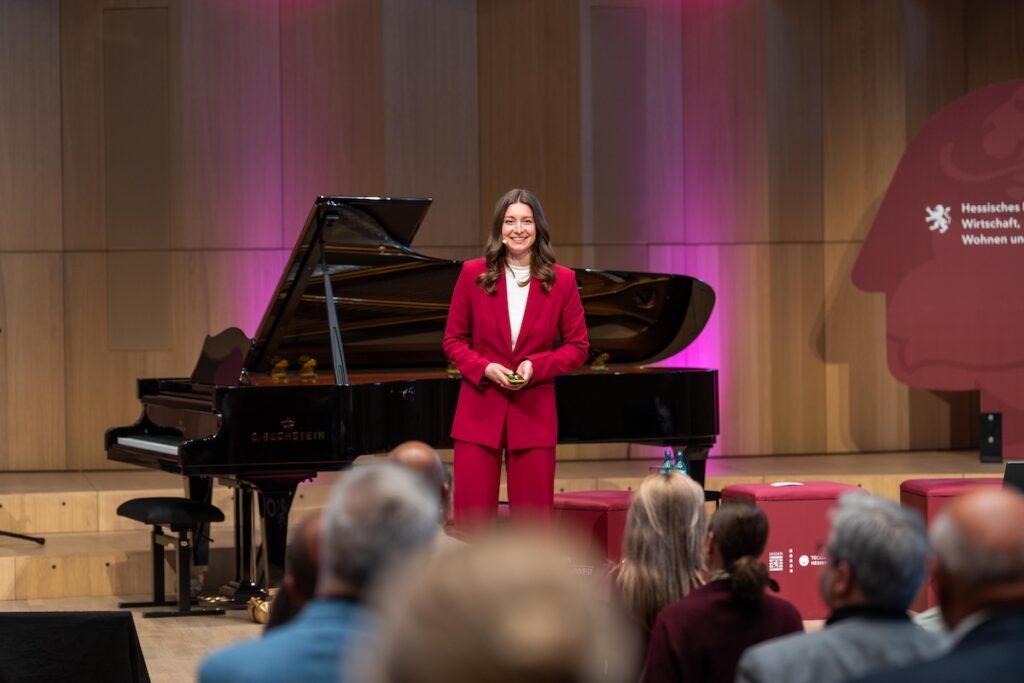
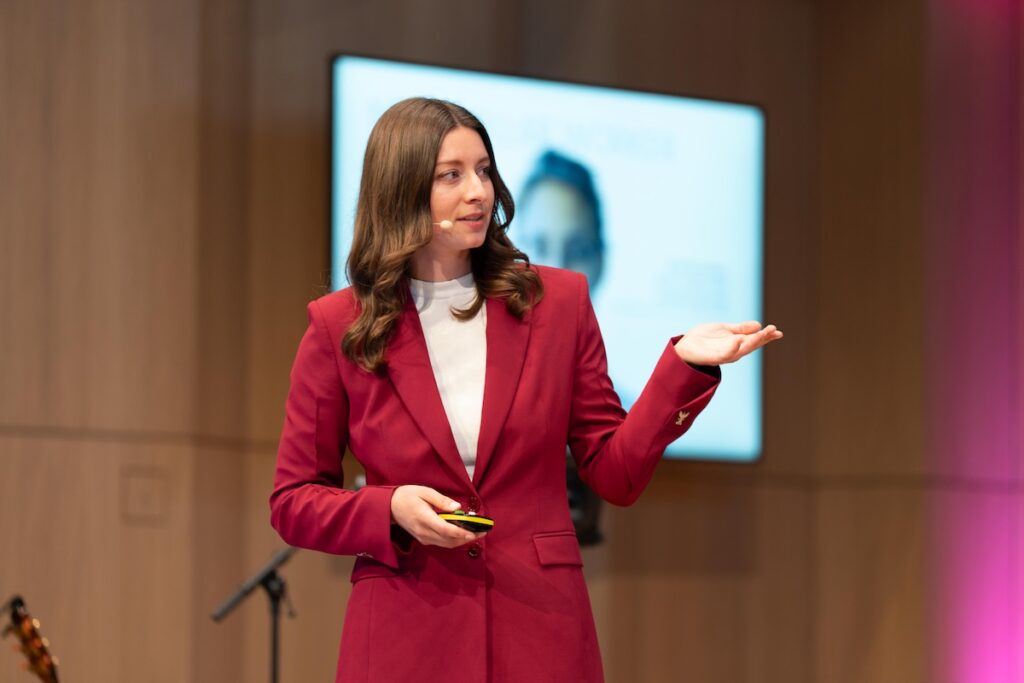
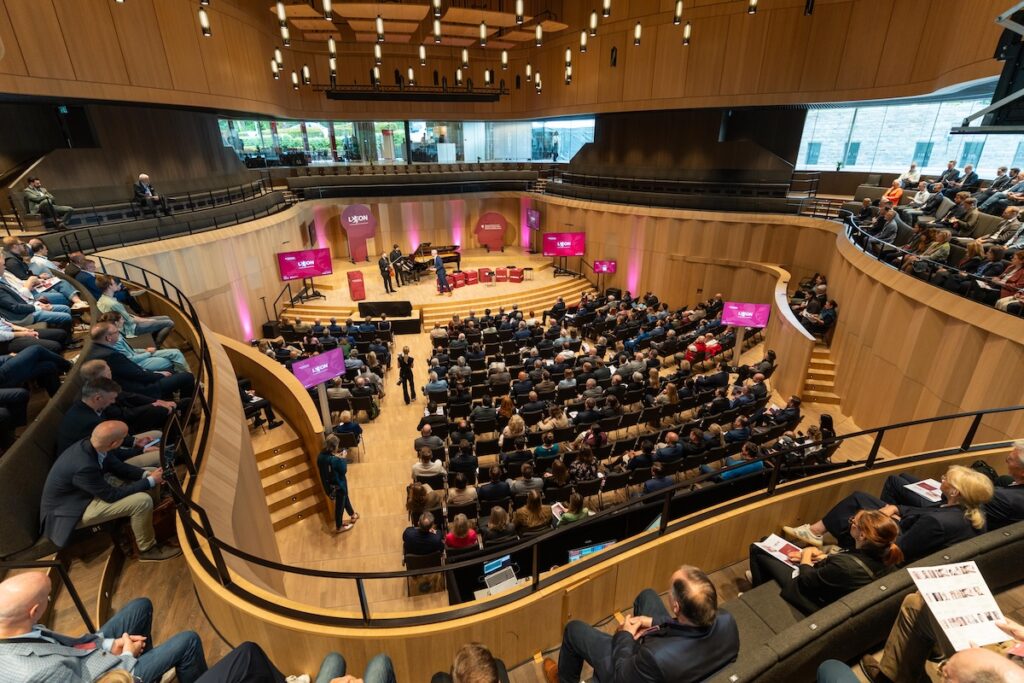
Photo: Jana Kay. From left: Brigadier General Holger Radmann, Prof. Dr.-Ing. Guido H. Baltes (moderator), Christoph Bernius (Divisional Board Member Cyber Risk, Commerzbank AG), Kaweh Mansoori (Minister of Economic Affairs), Carina Stöttner (CEO Futurewise Company), Alexander Laukenmann (Senior Executive VP Fraport), Peter R. Manolopoulos (CEO Schunk Group). A look back at the closing keynote by futures researcher Carina Stöttner at LEON 2026 – and what she had to say about the future of industrial work, resilience, and the risks of overcorrected protectionism. It is already past 5 p.m. at the Casals Forum in Kronberg. A long day of the congress lies behind the roughly one hundred decision-makers from business, science, politics, and the German armed forces. The day’s major themes – resilience, security, transformation financing, the Mittelstand as an anchor of stability – have been drawn out. Introduced by Prof. Dr.-Ing. Guido H. Baltes, Carina Stöttner takes the stage and poses the question: where could German industry and the economy develop in the future? Stöttner is a futures researcher – not a forecaster who extends charts into the next ten years, but someone who works with companies, ministries, and educational institutions to make desired futures concrete. Her closing keynote “The Future of Industrial Work” was not a full stop, but a starting signal: for a debate that has been conducted too technocratically in Germany for too long – and now needs a direction.

Resilience is not defense – but the ability to build the future

Throughout the day, resilience had been the leitmotif of LEON 2026. Minister of Economic Affairs Kaweh Mansoori had declared it the “decisive prerequisite for competitiveness.” Stöttner picked up the term – and turned it around. Resilience, as the thrust of her keynote went, is not the attempt to defend a status quo against an uncertain world. Resilience is the ability to remain capable of action despite – and with the help of – disruptive change, and to shape desirable futures. Those who understand resilience merely as a protective shield build bunkers. Those who understand it as the capacity to shape things build platforms. This set the frame for the keynote’s two major thematic strands: deeptech and radical innovation on the one side, education and the work of the future on the other.

Deeptech and radical innovation: Germany’s real question of competitiveness as a location

Germany has an innovation paradox. Strong in research, strong in patents, strong in its Mittelstand – and yet behind the USA and China in many key technologies. Stöttner delivered a diagnosis for this that resonated in the room: We have perfected incremental innovation, but have structurally weaned ourselves off radical innovation. Deeptech – that is, technologies with high scientific risk and a long development horizon, from quantum computing through synthetic biology to new energy and materials systems – requires different conditions than the optimizing innovation in which German industry grew large:
    • Longer capital horizons than the typical German financing mix offers today
    • A higher tolerance for failure, both within companies and in the logic of public funding
    • Closer interlocking of cutting-edge research and industrial scaling, as well as international cooperation
    • Talent that thinks across disciplines and can move between lab, code, and factory floor

The trade-offs of protectionism: When resilience becomes a cage

Stöttner devoted perhaps the most delicate part of her keynote to a question that is often circumvented in the current industrial-policy discourse: What happens when protectionism becomes too drastic? Resilience and sovereignty are legitimate, even compelling, goals. But they have a downside that must be named in honest industrial policy:
    • Loss of innovation through isolation. Those who reorganize critical intermediate products on a purely national basis pay not only higher unit costs, but also lose the competitive pressure and knowledge exchange that drives innovation. Closed systems age faster than open ones.
    • Strategic costs of the subsidy spiral. Every industry kept in the country by subsidy ties up resources that are then lacking elsewhere. Where investment goes into the production of efficient commodities, capacities no longer suffice for new high technologies. Industrial policy is always also an allocation decision against alternative futures.
    • Reciprocity risks. Protective measures provoke protective measures. An exporting nation like Germany loses structurally more in an escalating protectionism spiral – in social prosperity and in growth.
    • Democratic erosion. When “strategic industries” become a permanent category, the entanglements between the state and corporations grow, weakening competition and renewal in the long term.
Stöttner’s plea was not a naive call for free trade, but a plea for measure: resilience where it is relevant to security and not otherwise attainable – and openness everywhere else, because openness remains the true source of innovation and prosperity. The desirable future lies not in maximal self-sufficiency, but in smart, partnership-based sovereignty.

What remains: Three imperatives for the next decade

From Stöttner’s keynote, three imperatives can be distilled that apply to any industrial and economic location – and to Hesse in particular:
    1. Bet on deeptech and radical innovation. Incremental improvement is a mandatory exercise, no longer a competitive advantage. The real challenge is: financing, organizing, and scaling technologies with a ten- to fifteen-year horizon now.
    1. Think about education and work from the perspective of the life course. Not curricula, but learning architectures. Not qualification as a project, but learning as infrastructure.
    1. Balance resilience and openness. Sovereignty where it is indispensable. Openness everywhere else – as a source of innovation, talent, and economic strength.

About the congress: LEON 2026 in Kronberg, Hesse

On 6 May 2026, representatives from business, science, politics, and security institutions came together at the Casals Forum Wiesbaden for the new Hessian economic and industrial congress LEON. The leitmotif: resilience as the decisive question of competitiveness for the 21st century. Three brackets held the day together:
    • Resilience becomes a question of competitiveness – in the face of fragile supply chains, geopolitical tensions, and rising energy and security requirements.
    • Industry, innovation, and security can no longer be thought of separately. Key technologies such as AI or new materials have civilian and security-relevant applications.
    • From a problem of insight to a problem of implementation. “We do not have a problem of insight, but rather a task of implementation,” Minister of Economic Affairs Kaweh Mansoori put it in his opening remarks.

The keynotes and impulses at a glance

    • Kaweh Mansoori, Hessian Minister of Economic Affairs – Opening
    • Prof. Marcel Fratzscher (DIW Berlin) – Keynote: “After Us, the Future. A New Generational Contract for Freedom, Security, and Opportunity”
    • Peter R. Manolopoulos (CEO Schunk Group) – “What Makes Us Strong: Resilience in the Industrial Mittelstand”
    • Hans-Dieter Kemler (Member of the Board, Helaba) – “Transformation Financing in Germany – Hesse Leads the Way”
    • Alexander Laukenmann (Senior Executive VP Fraport) stepped in for Dr. Pierre Dominique Prümm (Member of the Board, Aviation, Fraport AG) – “Rethinking Resilience: How Aviation Shapes the Future in Turbulent Times”
    • Christoph Bernius (Divisional Board Member Cyber Risk, Commerzbank AG) – “Cyber Resilience: Europe’s Path to Security and Economic Strength”
    • Dr. Kai Beckmann (CEO Merck KGaA) – Video message on the future of Merck
    • Defence Panel with Major General Wolf-Jürgen Stahl (President, BAKS), Thomas Mailänder (EDAG), Daniel Zittel (Daimler Truck), Prof. Dr. Andreas Glas (UniBw Munich), Dr. Hans Christoph Atzpodien (BDSV), and Brigadier General Holger Radmann (Landeskommando Hesse): “Why We Need Strong Cooperation Between the Bundeswehr, Business, and Innovation”
    • Nathalia Schomerus (Legal Innovation Lead, Legora) – “Security and Resilience of German Industry with Regard to Cybersecurity”
    • Hesse’s industrial frontrunners – Presentation of six outstanding Hessian companies: JUMO, Energiesysteme Groß, Vacuumschmelze, Ponticon, Stephan Schmidt KG, and Alexander Binzel Schweisstechnik / Abicor Group
    • Carina Stöttner, futures researcher – Closing keynote: “The Future of Industrial Work”
The stage program was complemented by 13 breakout sessions on topics such as reducing bureaucracy, cybersecurity, sustainable industry, transformation financing, and security-policy cooperation – as well as a poetic-musical wrap-up at the close. LEON is designed as a long-term platform. It sees itself, in Mansoori’s words, as the prelude to a dialogue meant to shape the years ahead: “The future of Hesse as a location for innovation and industry is being decided now.”

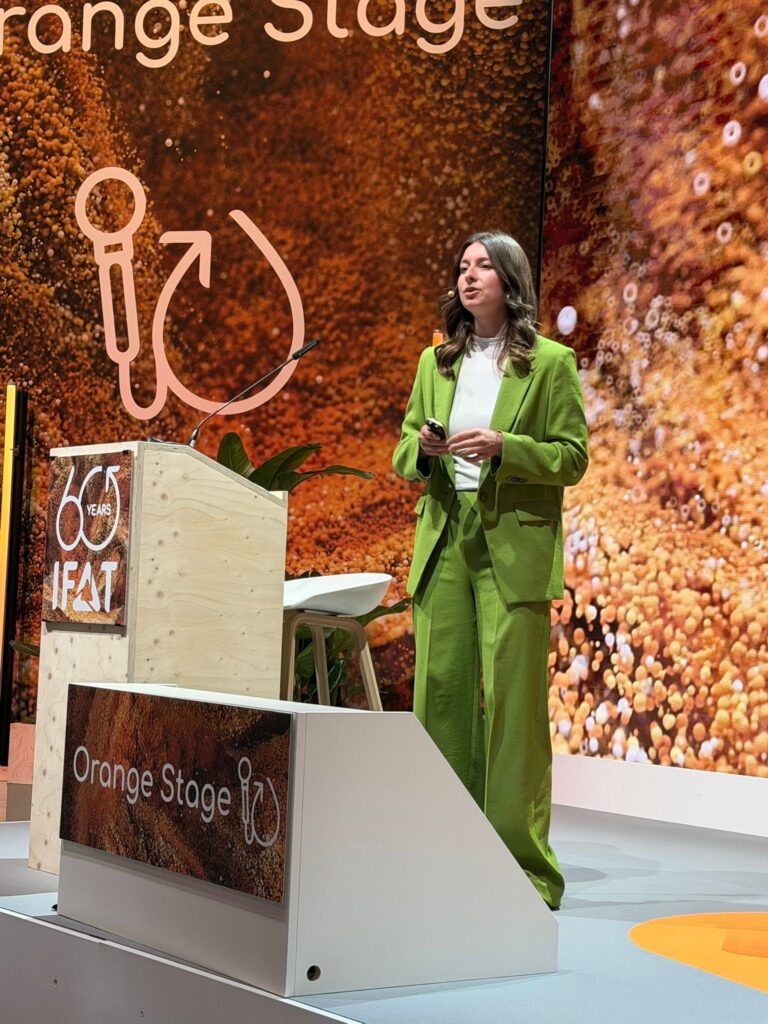
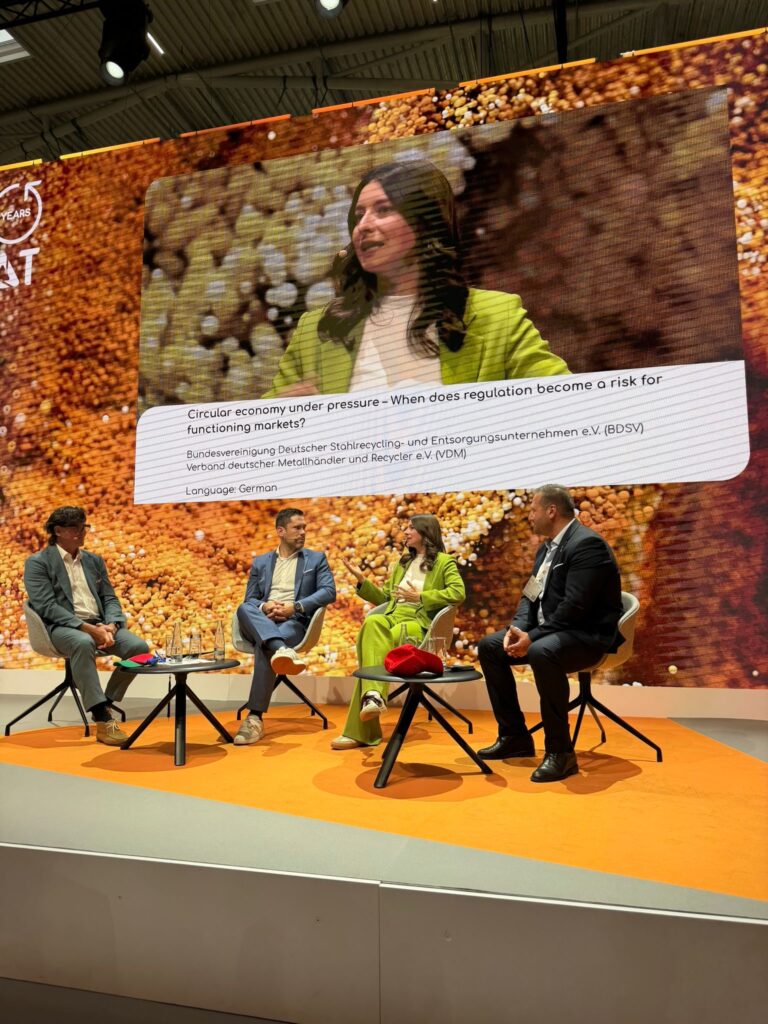
Carina Stöttner as a speaker at IFAT for the steel and metal recycling industry

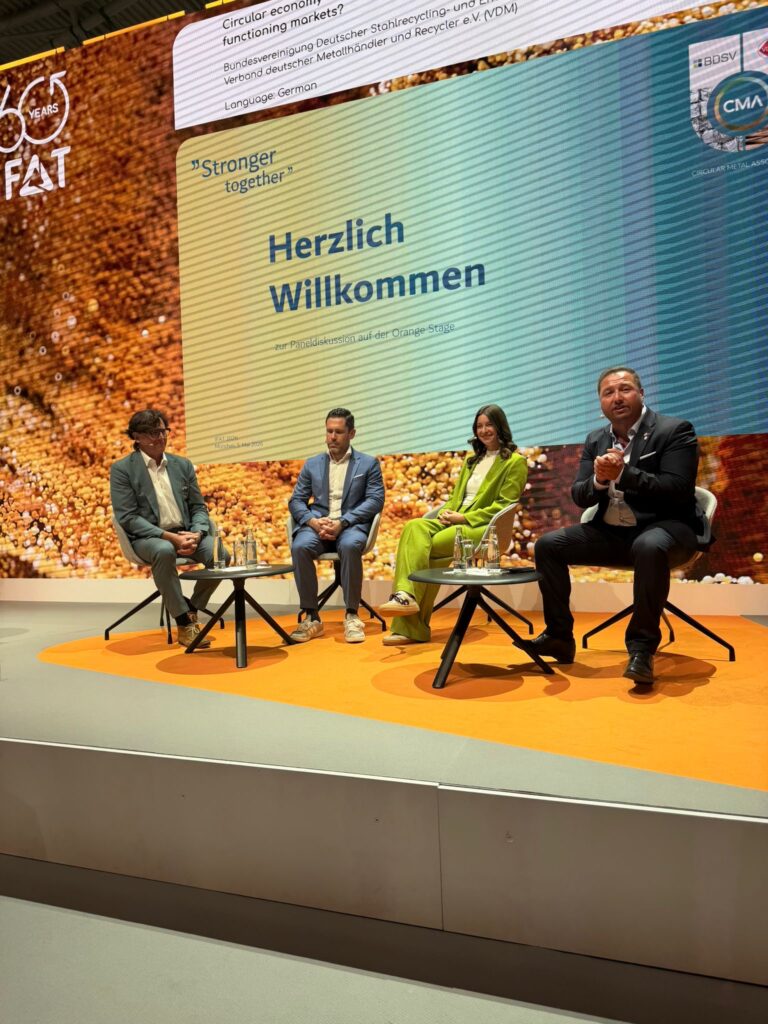
Munich, IFAT 2026 – the world’s leading trade fair for environmental technologies. On stage sit four people negotiating together a question that could hardly be more decisive for Europe’s industrial future: Where is the circular economy heading – toward a highly technologized, globally integrated system? Or are protectionism and geopolitical fragmentation pulling it back from the international stage?

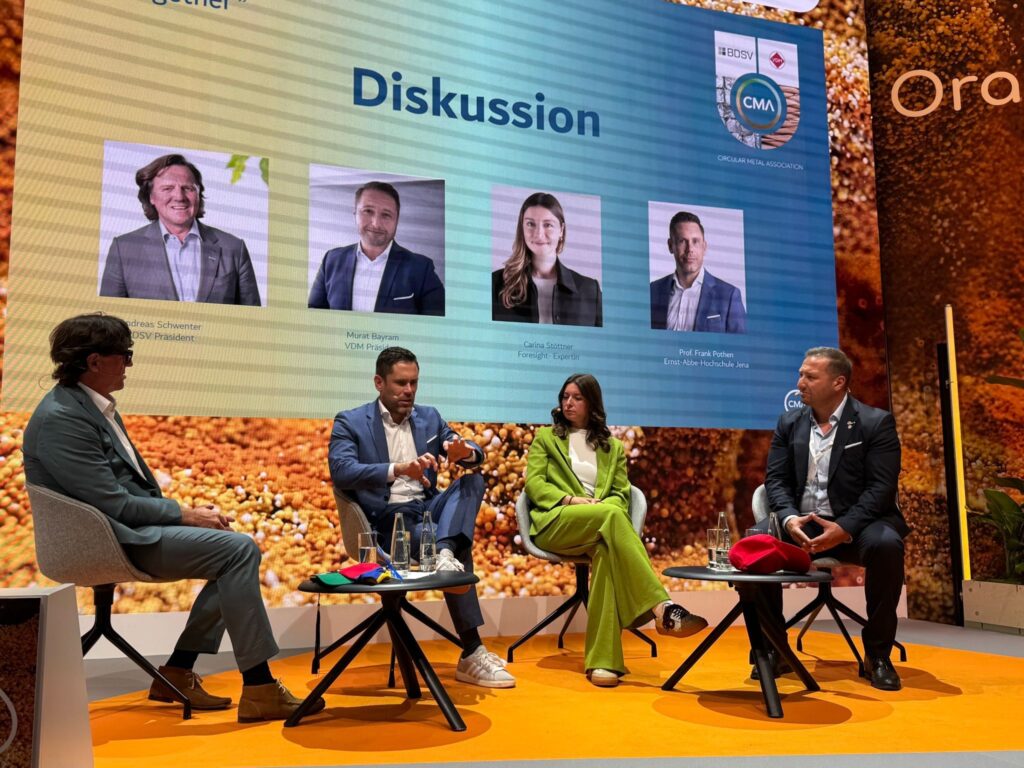
The hosts were the BDSV (German Federation of Steel Recycling and Disposal Companies) and the VDM (Association of German Metal Traders and Recyclers) – two associations that are currently merging into the future Circular Metal Association. On the panel: Murat Bayram, Andreas Schwenter, Prof. Dr. Frank Pothen – and futures researcher Carina Stöttner, whose short keynote set out the framework for the discussion.

What became visible in the process goes far beyond the industry: steel and metal recycling is one of the places where it is decided whether Europe remains industrially sovereign – and whether it does so in a way that is fit for the future.

The underrated industry: What has long existed

Before talking about the future, it is worth looking at the present. In Germany alone, around 10,000 circular economy companies account for about 300,000 jobs. In Europe, the figure runs to several million jobs. Family-run small and medium-sized enterprises, specialized plant manufacturers, highly technologized sorting operations – over the past decades they have invested billions in shredding plants, modern processing technology, and AI-supported sorting.

Murat Bayram’s message on the panel was therefore clear: This industry must stop talking itself down. Recycling operations are not a burden on the environment but, in the words of Andreas Schwenter, environmental protection facilities. They secure raw materials, avoid CO₂, enable green steel, and lay the foundation for industrial value creation in Europe.

Prof. Dr. Frank Pothen provided the economic underpinning: every ton of recycled steel scrap avoids considerable CO₂ emissions. The circular economy is not an accessory to climate policy, but its practical core.

Into this self-understanding Carina Stöttner placed her impulse – and opened up the view ahead.

Stöttner’s scenarios: possible futures for the circular economy

Stöttner’s opening question in the keynote was pointed: Where is our industrial economy heading? And what does that mean for the steel, metal, and recycling industry?

  • Scenario A – High-tech circular economy. A globally integrated circular economy in which AI sorting, robotics, new materials sciences, digital material passports, and international cooperation work together. Recycling rates rise drastically, the quality of secondary raw materials reaches primary level, and Europe becomes the technology leader in a growth market.
  • Scenario B – customers migrate away and relocate production largely abroad. And with them go raw materials in the form of production scrap, as well as the demand for recycled materials.
  • Scenario C – fragmented protective economy. Rising protectionism, new export bans, regional isolation. The industry loses economies of scale, investment power, and innovation pressure. The circular economy does become necessary, but does not turn into a global growth field.

Her message: Which scenario comes to pass is not a forecast. It is a decision. And this decision is being made right now – in Brussels, in Berlin, in supervisory boards, in investment committees.

Deeptech as the future formula of the circular economy

What Stöttner made particularly clear at IFAT: The next stage of the circular economy is a deeptech stage.

In concrete terms, that means:

  • AI-supported sorting and material identification, delivering secondary raw materials in qualities that today only primary raw materials achieve
  • Robotics in the dismantling of complex products – from electric cars and wind turbines to electronics
  • New materials and processes that orient product design toward circularity from the very outset
  • International cooperation in research, standards, and trade, because no single market is large enough to bear these investments alone

The trade-off: When protection weakens the very industry it is meant to protect

It was precisely at this point that Stöttner’s keynote interlocked with the pointed position of the associations on the panel. Andreas Schwenter and Murat Bayram were unequivocal on one matter: Protectionism, export bans, and additional trade barriers are not a future strategy.

The logic behind this is not ideological, but rooted in industrial reality:

  • Those who seal off markets deprive the industry of investment power. Recycling technology scales only with global sales markets – not with national residual volumes.
  • Those who restrict scrap exports slow innovation. International competition is precisely what has made the German recycling industry into the leading position it holds today.
  • Those who bet on self-sufficiency lose quality. Secondary raw materials require specialization, sorting purity, and international material flows. Closed systems produce lower qualities at higher prices.
  • Those who overload the Mittelstand with bureaucracy weaken the backbone of the circular economy. The ten thousand companies that carry the system need framework conditions that enable – not hold back.

That does not mean: no sovereignty. It means: smart sovereignty instead of a protective-wall reflex. Strategic reserves, diversification of critical material flows, European standards – yes. Long-term, blanket export bans and new walls – no.

Stöttner’s contribution to this: An industry that hunkers down gains short-term security and loses long-term future. The desirable circular economy is open, cooperative, and technologically ambitious – not defensive.

What the industry needs now: less nostalgia, more courage

From the panel and Stöttner’s keynote, four imperatives for the coming years could be distilled – not as finished answers, but as the right questions:

  1. Self-confidence instead of justification mode. For decades, the industry has been solving in practice what others demand in theory. This achievement belongs in the public narrative about climate protection and industrial sovereignty.
  2. Deeptech investments now. AI, robotics, new materials, and digital traceability are no longer pilot projects. They are the foundational technologies of the sector for the next twenty years.
  3. Framework conditions that enable. Reducing bureaucracy, faster approval procedures, reliable energy and trade policy – so that investments can take place in Europe rather than elsewhere.
  4. International cooperation as a strategy. European strength does not arise from going it alone, but in alliance with global partners, shared standards, and open markets – while maintaining sovereignty in genuine key areas.

The announced merger of BDSV and VDM into the Circular Metal Association fits precisely into this line: more clout, more unity, more future – and an industry that is finally positioning itself the way it has long been set up.

Conclusion: The future of the circular economy can be shaped

Stöttner’s central message at IFAT: The future is not predetermined. It can be shaped.

Whether Europe builds a global high-tech circular economy or retreats into a fragmented protective economy will not be decided in forecasts. It will be decided in the next rounds of investment, in the next wave of European regulation, in the question of whether the industry takes its own strength seriously – and whether politics has the courage to open up spaces of possibility rather than close them.

About the event

The IFAT in Munich is the world’s leading trade fair for water, wastewater, waste, and raw materials management. On the joint stage format of BDSV and VDM – the associations of the steel and metal recycling industry that are merging into the Circular Metal Association – the following took part in the discussion:

  • Carina Stöttner, futures researcher, CEO futurewise company
  • Murat Bayram, President, VDM
  • Andreas Schwenter, President, BDSV
  • Prof. Dr. Frank Pothen, Professor of economics at the University of Applied Sciences (Ernst-Abbe-Hochschule) in Jena

Offsite: Why executive boards, executives, and teams need a change of scenery

When the calendar is overflowing, the strategy is talked to death between two quarterly reports, and no one knows anymore what the team is actually working on – then it’s time for an offsite. But what lies behind the term that, in corporations and start-ups alike, is increasingly becoming a fixed part of leadership work?

Offsite meaning: More than just a change of scenery

The literal translation of offsite into German is simply “away from the location.” But the meaning of offsite goes far beyond the geographical aspect. An offsite is a planned work event outside the usual office environment that creates space for strategic thinking, intensive collaboration, and undisturbed reflection.

In contrast to the classic meeting in the conference room, an offsite event pursues three central goals:

  • Distance from day-to-day business, in order to sharpen the view of the big picture
  • Concentrated working time for strategic matters without interruptions from operational topics
  • Strengthening of relationships among the participants

While the term has long been established in English, offsite in German is increasingly catching on in business language – as a synonym for closed-session conference, strategy workshop, or leadership retreat.

The various formats: From the team offsite to the shareholder offsite

Not every offsite is the same. Depending on the group of participants and the objective, different formats have become established.

Team offsite

The team offsite is aimed at working groups, departments, or project teams. The focus here is on operational planning, team culture, and solving concrete challenges. Typical topics are quarterly planning, retrospectives, onboarding new team members, or the development of shared ways of working.

Company offsite

company offsite encompasses the entire workforce or at least large parts of it. Such formats often have an event character and combine work phases with shared experiences. They are particularly suited to conveying company values, making strategies transparent, and strengthening the sense of togetherness – an aspect that is becoming ever more important in times of distributed teams and hybrid work.

Executive board offsite and board meeting offsite

The offsite for the executive board is the premier format of strategic closed sessions. Here, the management, board members, or C-level come together to work on fundamental questions away from operational pressure: Where does the company stand? Where is the market heading? Which strategic course must be set now?

board meeting offsite goes beyond the formal session. While regular board meetings are often dominated by mandatory topics, reportings, and resolutions, the offsite format creates space for more in-depth discussions about future themes, risks, and opportunities.

Shareholder offsite

The shareholder offsite brings together shareholders, investors, and management. Such meetings serve the strategic exchange about the long-term direction of the company, upcoming investment decisions, or the assessment of business development. In contrast to the annual general meeting, the focus here is on confidential, dialogue-based exchange.

Why classic offsite meetings often fail

Despite good intentions, many offsite meetings turn out disappointing. The most common causes can be traced back to a few patterns.

For one thing, the preparation is underestimated. An offsite is not a change of scenery with random discussions, but requires a clear agenda, a well-thought-out methodology, and defined outcome goals. For another, neutral facilitation is often lacking. When the management facilitates and joins the discussion on substance at the same time, both roles suffer. Important voices go unheard, conflicts are swept under the rug, decisions are postponed.

Another problem: the lack of follow-up. What was decided at the offsite peters out in day-to-day business if no consistent implementation follows.

What makes a good offsite

Successful offsites are characterized by a few central features. They have a clear focus rather than an overloaded agenda – better to truly penetrate two topics than to skim over ten superficially. They make use of the right environment, because the place shapes thinking: an inspiring venue opens up different mental spaces than the conference room at headquarters.

Good offsites work with professional facilitation that guides through complex discussions, involves all voices, and also puts uncomfortable topics on the table. They combine work and recovery in a dramaturgy that interlocks phases of concentration with informal encounters, movement, and reflection time. And they end with concrete results: defined measures, responsibilities, and timelines.

Strategic topics for executive board offsites

At the executive board level in particular, certain thematic fields have proven especially valuable for offsite formats.

Future strategy: How does the company position itself over the next five to ten years? Which technological, regulatory, and societal developments will shape the business model? Such questions need time, space, and a protected setting.

Scenario planning: Instead of linear forecasts, executive boards develop alternative images of the future at offsites. What happens if the economy slumps? If a new competitor shakes up the market? If regulatory requirements change fundamentally? Thinking in scenarios makes the company more resilient.

Sharpening the customer view: In the operational everyday, leaders often lose their direct line to customers. An offsite can bring this view back into focus – through customer journey analyses, persona work, or direct exchange with selected customers.

Organizational development: Phases of growth, crises, or strategic realignments raise the question of whether the organization still fits the strategy. Executive board offsites offer the setting to fundamentally question structures, processes, and leadership models.

The underrated factor: External facilitation

Anyone planning an offsite at the executive board level or in the extended leadership circle should not underestimate one aspect: the facilitation. External, professional facilitation brings several advantages. It is neutral, has no political interests within the company, and can also ask the difficult questions that no one internally dares to voice. It structures discussions with proven methods, ensures the participation of everyone present, and captures results in such a way that they become actionable.

Especially with strategically highly relevant topics such as future strategy or scenario planning, this investment pays off. The difference between a well-facilitated and a poorly facilitated executive board offsite can amount to several million euros – in wrongly set priorities, missed opportunities, or delayed decisions.

Conclusion: The offsite as a strategic instrument

An offsite is not a luxury, but a strategic tool. Properly conceived and professionally facilitated, it creates clarity where complexity reigns, alignment where silos dominate, and the capacity to act where stagnation looms. Whether as a team offsite, company offsite, executive board closed session, or shareholder offsite – the format unfolds its effect when preparation, facilitation, and follow-up interlock professionally.

The change of scenery alone does not yet make for success. But combined with clear focus, methodological depth, and neutral leadership, the offsite becomes a lever for the most important decisions of your company.

Book offsite facilitation for executive boards and executives

Are you planning an offsite on topics such as future strategy, scenario planning, or the customer view – and would you like it to truly have an impact? Experienced external facilitation ensures that your valuable time at the C-level leads to concrete results.

Arrange a no-obligation conversation now and have your next executive board or executive offsite professionally facilitated.

Jan David Ott and Carina Stöttner are a well-coordinated team when it comes to facilitating your executive board or leadership offsite. Request a no-obligation initial conversation.

Denkansätze aus unserer Foresight-Arbeit mit Executives, die jede Führungskraft kennen sollte

Wenn wir über Zukunft nachdenken, richten wir den Blick fast automatisch nach vorne: auf Trends, Szenarien, Risiken und Chancen. Doch eine der unterschätztesten Fragen strategischer Führung lautet nicht: Was kommt als Nächstes?

Sondern:

Was hätten wir in der Vergangenheit anders entschieden?

Ich halte wenig davon, vergangene Entwicklungen einfach linear in die Zukunft fortzuschreiben, sie zu extrapolieren. Aber vergangene Entscheidungen zu hinterfragen – oder sogar alternative Vergangenheiten gedanklich durchzuspielen – ist ein erstaunlich wirkungsvolles Instrument für bessere Entscheidungen von morgen.

Zwei Methoden nutze ich dafür regelmäßig in meiner Arbeit mit Führungskräften:

1. Counterfactual Thinking: Was wäre gewesen, wenn wir anders entschieden hätten?

Stellen wir uns eine Stadt vor, die in den 2010er-Jahren ihre besten Innenstadtlagen an große Einkaufszentren und internationale Ketten vergeben hat: H&M, Zara, die üblichen Namen.

Damals schien das vernünftig. Große Marken galten als sicher. Sie brachten Frequenz, Kaufkraft und verlässliche Gewerbesteuereinnahmen.

Zehn Jahre später ist die Innenstadt verödet. Der E-Commerce hat viele Filialmodelle ausgehöhlt. Die Mieten blieben hoch. Cafés, unabhängige Läden und lokale Konzepte, die urbane Lebendigkeit schaffen, hatten nie eine echte Chance.

Die damalige Grundannahme lautete:
Große Ketten sind resilient. Sie ziehen Menschen an. Sie sind die Zukunft.

Doch was wäre gewesen, wenn die Stadt damals anders entschieden hätte? Wie hätte sie entscheiden können und was wären die Folgen gewesen?

Genau hier liegt die Stärke des Counterfactual Thinking. Die Methode zeigt nicht nur, was schiefgelaufen ist. Sie legt offen, welche Annahme eine Entscheidung damals selbstverständlich erscheinen ließ.

Und genau das ist strategisch relevant für heute:

Welche unserer heutigen Gewissheiten wirken in zehn Jahren wie dieses leere Einkaufszentrum?

2. The Pre-Mortem: Wie ist es gescheitert?

Ein zweiter Ansatz ist das sogenannte Pre-Mortem.

Eine Stadt plant ihren ersten großen Marathon. Noch bevor Entscheidungen final getroffen werden, stellt das Team eine ungewöhnliche Frage:

Stellen wir uns vor, es ist der Abend nach dem Event – und es war ein Misserfolg. Was ist passiert?

Plötzlich kommen Antworten auf den Tisch:

  • Zu wenig medizinisches Personal entlang der Strecke
  • Umleitungen wurden Anwohnern nie kommuniziert
  • Verpflegungsstationen lagen an den falschen Punkten
  • Der Start kollidierte mit einer anderen Großveranstaltung

Nichts davon stand im ursprünglichen Plan. Aber alles konnte rechtzeitig korrigiert werden.

Das Pre-Mortem verändert die Perspektive. Statt nur abstrakt zu fragen: Könnte das scheitern?, fragt es konkreter und wirksamer:

Wie ist es gescheitert?

Diese gedankliche Vorwegnahme von Misserfolg erhöht die Chance, reale Risiken frühzeitig zu erkennen – bevor sie teuer werden.

Warum diese Methoden für Führungskräfte so wertvoll sind

In der strategischen Arbeit verbringen wir viel Zeit mit dem Blick nach vorn: Marktveränderungen, technologische Entwicklungen, geopolitische Szenarien.

Doch manche der klarsten Gedanken über Zukunft entstehen durch einen ehrlichen – oder hypothetischen – Blick zurück.

Denn dort erkennen wir:

  • welche Annahmen wir für Fakten hielten
  • welche Risiken wir systematisch unterschätzten
  • welche Denkfehler wir heute womöglich wiederholen

Strategische Zukunftsfähigkeit bedeutet nicht nur, nach vorne zu schauen. Sie bedeutet auch, die eigenen Gewissheiten zu prüfen.

Willkommen an Bord: Jan David Ott wird Teil der Futurewise Company

Wir freuen uns sehr, Jan David Ott bei der Futurewise Company willkommen zu heißen.

Als Facilitator for Long-Term Strategic Decision-Making & Change begleitet Jan David Aufsichtsräte, Vorstände und Executives dabei, Zukunft nicht nur zu diskutieren, sondern Wandel aktiv zu führen. Sein Fokus liegt auf langfristig tragfähigen Entscheidungen – besonders unter unsicheren Zukunftsbedingungen.

Jan David studierte Jura, Geschichte und Romanistik und verbrachte mehrere Jahre im Ausland – unter anderem in Europa, den USA und dem Nahen Osten. Diese internationale Erfahrung prägt bis heute seinen Blick auf Führung, Transformation und komplexe Entscheidungsprozesse.

Als Geschäftsführer eines Hamburger Callcenters und Leiter des Moskauer Büros des Deutsch-Russischen Forums an der Deutschen Botschaft verbindet er unternehmerische Praxis mit Erfahrung an der Schnittstelle von Wirtschaft, Politik und internationalem Dialog.

Seit 2021 arbeitet er im Bereich Corporate Foresight. Ergänzt wird seine Praxis durch Ausbildungen als interkultureller Mediator sowie als Coach, Trainer und Change Manager.

Mit Jan David stärken wir gezielt unsere Kompetenz in den Bereichen Executive Facilitation, Leadership under Uncertainty und Change. Er bringt die Fähigkeit mit, auch in anspruchsvollen Situationen Klarheit zu schaffen, Perspektiven zusammenzuführen und strategische Bewegung zu ermöglichen.

Willkommen an Bord, Jan David. Wir freuen uns auf die gemeinsame Zukunft.

Was ist eine Keynote Speech?

Wer eine Konferenz, eine Messe oder einen Unternehmenskongress besucht, begegnet früher oder später dem Begriff Keynote. Doch was steckt eigentlich dahinter – und warum hat sich das englische Lehnwort auch im deutschen Sprachraum so fest etabliert?

Der Begriff und seine Herkunft

Der Ausdruck Keynote stammt aus der Welt der Vokalmusik. A-cappella-Ensembles – ob Doo-Wop-Gruppen oder Barbershop-Quartette – spielen oder singen vor jedem Auftritt gemeinsam einen einzigen Ton an. Dieser Ton legt die Tonart fest, in der das Stück aufgeführt wird, und stimmt alle Sängerinnen und Sänger aufeinander ein. Übertragen auf die Welt des öffentlichen Redens bedeutet das: Der Keynote-Speaker stimmt sein Publikum auf die Kernbotschaft einer Veranstaltung ein – er gibt den Grundton an, nach dem sich alles Folgende richtet.

„Der Keynote-Speaker stimmt sein Publikum auf die Kernbotschaft ein – er gibt den Grundton an.”

Im Deutschen spricht man auch von einem Plenarvortrag – einem Vortrag vor allen Teilnehmenden im Plenum einer Konferenz. In der Praxis hat sich jedoch der englische Begriff weitgehend durchgesetzt, selbst in deutschsprachigen Veranstaltungsprogrammen.

Funktion und Bedeutung

Eine Keynote ist weit mehr als eine Eröffnungsrede. Sie legt das inhaltliche und emotionale Fundament für das gesamte Programm: Sie greift die wichtigsten Themen der Tagung oder Messe vorweg, stellt herausragende Neuheiten vor und rahmt die Botschaft, die alle weiteren Sessions und Diskussionen durchziehen soll. Die Keynote gibt Orientierung – sie beantwortet für das Publikum die Frage: Warum sind wir heute hier?

WUSSTEN SIE SCHON?

Bei großen Kongressen können mehrere Keynotes parallel stattfinden. Zunehmend wird der Begriff auch als Synonym für Plenarsitzung oder eingeladener Vortrag verwendet – mit einer Eröffnungs-Keynote, einer abschließenden Keynote und weiteren Keynotes dazwischen.

Zeitliche Einordnung

Häufig steht die Keynote am Anfang einer Veranstaltung – aber nicht zwingend. Sie kann auch in der Mitte als motivierende Überleitung oder am Ende als inspirierende Abrundung platziert werden. Die Entscheidung, wann eine Keynote stattfindet, hängt von der dramaturgischen Absicht der Veranstaltenden ab.

Wer hält eine Keynote?

Keynote-Speaker sind meist Persönlichkeiten mit hohem Bekanntheitsgrad oder ausgewiesener Expertise: Führungskräfte, Unternehmer, Politiker, Spitzensportler oder renommierte Wissenschaftler. Gerade in akademischen Kontexten – etwa bei Hochschulabschlüssen – werden diese Reden oft als Commencement Speech bezeichnet und von eingeladenen Prominenten oder Wissenschaftlerinnen gehalten.

Die Auswahl des richtigen Speakers ist strategisch bedeutsam: Eine bekannte Persönlichkeit oder jemand mit anerkannter Fachkompetenz steigert die Attraktivität der Veranstaltung und weckt das Interesse potenzieller Teilnehmender bereits im Vorfeld.

Die Rolle des Keynote-Speakers

Oft geht die Aufgabe eines Keynote-Speakers über den Vortrag selbst hinaus: In manchen Formaten übernimmt er oder sie auch die Rolle des Konferenz-Moderators und begleitet das gesamte Programm. So entsteht ein roter Faden, der die Veranstaltung inhaltlich zusammenhält.

Honorar und Vermittlung

Keynote-Speaker sind entweder selbstständig tätig oder werden von spezialisierten Redneragenturen – sogenannten Speakers Bureaus – vertreten. Wird ein Speaker über eine Agentur gebucht, fällt üblicherweise eine Provision von 25 bis 30 Prozent an. Nach gängiger Branchenpraxis trägt der Speaker selbst diese Provision, sodass das Honorar für den Auftraggeber transparent und einheitlich bleibt.

Keynote vs. Plenarvortrag: Ein kultureller Unterschied?

Obwohl Plenarvortrag die treffende deutsche Entsprechung wäre, signalisiert der Begriff Keynote heute mehr als nur ein Format: Er steht für einen bestimmten Anspruch an Inszenierung, Relevanz und Strahlkraft. Nicht zuletzt durch tech-geprägte Großveranstaltungen – man denke an die legendären Präsentationen von Apple – hat sich die Keynote als eigenständiges Kommunikationsformat etabliert, das weit über eine schlichte Eröffnungsrede hinausgeht.

Komplex vs. kompliziert: Warum wir adaptive Handlungsstrategien brauchen

Kann ein Schmetterling wirklich einen Tornado auslösen?
Wahrscheinlich werden wir es nie erfahren. Und genau das ist der Punkt.

Denn selbst wenn wir nie mit Sicherheit sagen können, ob der Flügelschlag eines Schmetterlings in Brasilien tatsächlich einen Tornado in Texas auslöst – wir müssen trotzdem mit dem Tornado umgehen lernen.

Der Schmetterlingseffekt: Warum kleine Ursachen große Wirkungen haben können

Der sogenannte Schmetterlingseffekt ist eine Metapher aus der Chaostheorie, geprägt vom Meteorologen Edward Lorenz. Seine These: Winzige Veränderungen in einem Ausgangszustand können – über viele Wechselwirkungen hinweg – massive Auswirkungen haben.

Ein minimal veränderter Messwert, ein kleiner Impuls, ein scheinbar irrelevantes Ereignis kann ein ganzes System in eine andere Richtung kippen.

Das berühmte Beispiel mit dem Schmetterling und dem Tornado ist deshalb weniger als naturwissenschaftliche Behauptung zu verstehen – sondern als Sinnbild für unsere Welt.

Unsere Welt ist nicht mehr kompliziert. Sie ist komplex.

Und dieser Unterschied ist entscheidend.

  • Kompliziert bedeutet: schwer verständlich, aber grundsätzlich lösbar.
    Es gibt klare Ursache-Wirkungs-Beziehungen. Mit genügend Expertise, Zeit und Analyse kommen wir ans Ziel. Ein Uhrwerk ist kompliziert.
  • Komplex beschreibt Systeme, die dynamisch, vernetzt und nicht linear sind.
    Ursache und Wirkung liegen zeitlich und räumlich auseinander, Effekte verstärken oder neutralisieren sich gegenseitig. Wetter, Verkehr, Gesellschaft – all das ist komplex.

Unsere Welt ist längst in dieser zweiten Kategorie angekommen.
Globalisierung, KI-Systeme, geopolitische Verschiebungen, Multipolarität: Eine kleine Veränderung an einer Stelle kann globale Konsequenzen haben – oft verzögert, oft unerwartet.

Warum Prognosen nicht mehr tragen

Ähnlich wie bei der Wettervorhersage gilt: Über einen gewissen Zeithorizont hinaus wird es spekulativ.
Nicht, weil wir zu wenig Daten haben. Sondern weil komplexe Systeme prinzipiell nicht stabil prognostizierbar sind.

Der Begriff VUCA (Volatility, Uncertainty, Complexity, Ambiguity) ist deshalb nicht nur ein Buzzword.
Er beschreibt ziemlich treffend die Realität, in der wir heute leben.

Von der Lösung zur Anpassung

In der Vergangenheit konnten wir viele Herausforderungen analytisch lösen:

  • Problem definieren
  • Ursache identifizieren
  • Lösung implementieren

Wenn wir nur strategisch genug, tief genug und lange genug daran gearbeitet haben, ließ sich ein Problem „abschließen“.

Heute stoßen wir an eine neue Grenze: Manche Probleme lassen sich nicht final lösen. Sie bleiben in Bewegung.

Das heißt nicht, dass wir handlungsunfähig sind.
Aber es heißt, dass wir anders handeln müssen.

Drei adaptive Wege, mit Komplexität umzugehen

1. Szenarien-Denken – „Was wäre, wenn …?“

Nicht mit dem Anspruch, die eine richtige Zukunft vorherzusagen.
Sondern um verschiedene mögliche Zukünfte durchzudenken – im Wissen, dass keine davon exakt so eintreten wird.

Und trotzdem steckt in jeder eine Erkenntnis, die hilft, heute bessere Entscheidungen zu treffen.

2. Futures Wheel – raus aus dem linearen Denken

Das Futures Wheel hilft, die Konsequenzen einer einzelnen Entwicklung sichtbar zu machen:

  • erste Effekte
  • zweite, dritte, vierte Ordnung
  • Wechselwirkungen, Rückkopplungen, Nebenfolgen

Nicht um alles zu kontrollieren – sondern um Komplexität überhaupt erst zu sehen.

3. Fokus auf das, was ich kontrollieren kann

Das ist der vielleicht wichtigste Punkt – und zugleich der persönlichste.

Wo fürchte ich mich vor Entwicklungen, rege mich auf, verliere Energie?
→ Das entzieht mir Handlungsfähigkeit.

Wo kann ich gestalten, entscheiden, beeinflussen – auch im Kleinen?
→ Das gibt Energie zurück. Und Agency.