Tag: Zukunftsforschung

Foresight: Meaning, Methods and Benefits Explained Simply

Foresight shows up everywhere these days: in job ads, strategy papers and innovation departments. But what does the term actually mean? This article explains what foresight is, how it differs from forecasting and trend research, and which methods organisations use to work with the future in a structured way.

Key takeaways

  • Foresight literally means looking ahead or anticipation.
  • As a technical term, it refers to the systematic exploration of multiple possible futures.
  • The goal is not the correct prediction, but the better decision today.
  • Core methods: horizon scanning, STEEP analysis, scenario planning, Delphi, backcasting, roadmapping.

What does foresight mean?

Foresight means the ability to see ahead, anticipate or look into the future. Its counterpart is hindsight, the view back on events after the fact.

In a professional context, the term does not describe a personal talent but a structured way of working:

Short definition: Foresight is the systematic exploration of possible futures in order to make better decisions today.

Two things in this definition matter. First, the plural: foresight does not ask about the future but about several conceivable developments. Second, the link to the present. The aim is not to predict the future correctly but to increase one’s own capacity to act.

Origin and spread of the term

The word is made up of fore (ahead) and sight and has been in use in English since the Middle Ages. As a technical term it gained currency from the 1970s onwards, when Japan began running regular national Delphi studies on technological developments. In the 1990s, government foresight programmes followed in the United Kingdom, Germany and at EU level. Since then, the approach has spread from technology policy into companies, NGOs and public administration.

Two levels of meaning

Depending on the context, foresight means different things:

  • In everyday language, foresight describes a quality in people. Someone with foresight thinks ahead, recognises consequences early and takes precautions accordingly.
  • As a discipline, foresight refers to a field with its own methods, roles and processes. It is part of futures studies and is specified further according to its area of application: strategic foresight, corporate foresight, technology foresight or policy foresight.

Foresight, forecasting and trend research compared

The terms are often used interchangeably, but they mean different things.

ApproachGuiding questionTime horizonOutput
ForecastingWhat is most likely to happen?short to medium terma number, a value, a range
Trend researchWhich developments are already visible?ongoingdescribed trends and patterns
ForesightWhat could happen, and what would it mean for us?medium to long termseveral images of the future plus options for action
VisionWhich future do we want to reach?long terma desired target state
Foresight compared with forecasting, trend research and vision.

A sales forecast for the coming quarter is forecasting. Asking what your business model would need to look like in ten years under four very different sets of conditions is foresight.

Strategic foresight and corporate foresight

Strategic foresight links futures work directly to strategy development. The insights feed into portfolio decisions, investments and risk management rather than ending up in a report.

Corporate foresight refers to embedding this work permanently in the company, for example through a dedicated team, a trend radar or regular formats at leadership level.

Studies on the future readiness of companies show a recurring pattern: organisations that pick up changes in their environment early and process them in a way that connects internally respond faster to market disruptions than competitors without such structures.

Why foresight is becoming more important

Several developments are increasing the need for forward-looking work:

  • Shorter innovation cycles, particularly driven by artificial intelligence and automation
  • Regulatory dynamics, for example around sustainability, supply chains and data protection
  • Geopolitical uncertainty with direct consequences for sourcing and sales markets
  • Demographic change and shifting expectations of work
  • Climate change with both physical and transition risks

In environments like these, extrapolating the past loses its explanatory power. That is exactly where foresight comes in.

The most important foresight methods

Horizon scanning

Systematic monitoring of signals from science, politics, technology and society. The aim is to pick up weak signals before they become trends.

STEEP analysis

Structuring the environment along the dimensions of Society, Technology, Economy, Ecology and Politics. It prevents the analysis from narrowing down to one’s own industry.

Scenario planning

The best-known foresight method. From the key uncertainties, usually three to four internally consistent images of the future are developed and then tested against the organisation’s own strategy.

Delphi survey

A multi-round, anonymous expert survey. After each round, participants receive the aggregated results and can reconsider their assessment.

Wild cards and black swans

Events with a low probability of occurring but a high impact. They are deliberately played through to expose blind spots.

Backcasting

The path runs backwards from the target state to the present. The question is: what would need to have happened, and by when, for this state to come about?

Roadmapping

Translates images of the future into concrete milestones for technology, product and capability building.

How a foresight process works

  1. Set the frame. Define the decision question, time horizon and scope.
  2. Scan. Collect signals, data and expert knowledge.
  3. Analyse. Identify and assess drivers and uncertainties.
  4. Design futures. Develop scenarios or images of the future.
  5. Derive. Define strategic options, early indicators and next steps.

The fifth step determines the value. Without a link to real decisions, foresight remains a workshop experience.

Common mistakes

  • Mistaking foresight for prediction and ending up pursuing only one scenario
  • Choosing a time horizon so short that the analysis shrinks down to existing plans
  • Relying exclusively on internal perspectives
  • Documenting results without assigning responsibilities and defining early indicators
  • Running the process once instead of updating it regularly

Frequently asked questions about the meaning of foresight

What does foresight mean?

Foresight means looking ahead or anticipating what is to come. As a technical term, it stands for the systematic exploration of possible futures.

What is the difference between foresight and forecasting?

Forecasting calculates the most likely development of a given variable. Foresight works with several possible futures and asks what they mean for one’s own actions.

Is foresight the same as futures studies?

Futures studies is the umbrella term for the academic study of the future. Foresight refers to the application-oriented practice within that field.

What does a foresight manager do?

They monitor the business environment, facilitate scenario and strategy processes, maintain trend radars and translate insights into recommendations for senior management.

Which organisations benefit from foresight?

Any organisation with long investment cycles, dense regulation or rapid technological change. Smaller organisations can start with a lean trend radar and an annual scenario workshop.

Conclusion

The meaning of foresight can be reduced to a simple formula: not predicting the future, but being prepared for several futures. Those who capture environmental signals in a structured way, translate them into scenarios and derive verifiable options for action from them buy themselves reaction time. That is precisely the practical value of this discipline.

Warum Szenariendenken essenziell ist - Carina Stöttner in Konstanz

Eine Methode aus den 1970er-Jahren erlebt gerade ihr Comeback. Carina Stöttner, CEO der Futurewise Company, erklärt, warum das kein Zufall ist – und was Szenarioarbeit wirklich verändert.

Die meisten Unternehmen planen mit genau einer Zukunft: der fortgeschriebenen Gegenwart. Umsatz plus X Prozent, Kosten minus Y, Marktanteil bleibt stabil. In dieser Logik steckt eine stille Annahme – dass das Morgen ein leicht verändertes Heute sein wird.

In stabilen Zeiten funktioniert das erstaunlich gut, sagt Carina Stöttner. In komplexen Zeiten wird es zum Risiko.

Genau hier setzt Szenariodenken an. Und die wichtigste Klarstellung kommt gleich zu Beginn: Szenarien sind keine Prognosen. Es geht nicht darum, richtig zu liegen. Es geht darum, auf mehrere Möglichkeiten vorbereitet zu sein.

Was Shell in den 70er-Jahren gelernt hat

Die vielleicht bekannteste Geschichte der Szenarioplanung beginnt Ende der 1960er-Jahre in der Planungsabteilung von Royal Dutch Shell. Ein paar Pioniere bekamen den Auftrag, sich mit einer damals wenig populären Möglichkeit zu beschäftigen: dass der Ölpreis steigen könnte.

Niemand bei Shell hat die Ölkrise in ihrer Schwere von 1973 vorhergesagt. Das ist, so Stöttner, der entscheidende Punkt.

Aber als sie eintrat, war sie für die Führungskräfte kein völlig unbekanntes Terrain. Sie hatten diese Welt gedanklich schon einmal betreten. Sie mussten nicht erst monatelang fassungslos sein, bevor sie handlungsfähig wurden. Während andere noch damit beschäftigt waren, das Geschehene überhaupt einzuordnen, traf Shell bereits Entscheidungen – und ging aus der Krise deutlich stärker hervor, als es hineingegangen war.

Für Carina Stöttner ist das bis heute die wichtigste Lektion der ganzen Methode:

Szenarien verändern nicht die Welt. Sie verändern die Landkarte, die Entscheider:innen im Kopf tragen.

Das eigentliche Produkt von Szenarioarbeit ist nicht das Dokument, das am Ende im Regal steht. Es ist das veränderte Denken der Menschen, die damit gearbeitet haben. Deshalb funktioniert es auch nicht, sich Szenarien einfach von außen einkaufen und präsentieren zu lassen. Wer nicht selbst durch den Prozess gegangen ist, findet den Weg nicht.

Warum unser Gehirn ein schlechter Zukunftsforscher ist

Wenn Szenarioarbeit so wirksam ist – warum tun wir uns dann so schwer damit?

Die Antwort liegt zu einem guten Teil in unserem Kopf. Unser Gehirn ist nicht darauf optimiert, über offene Zukünfte nachzudenken, erklärt Stöttner. Es ist darauf optimiert, schnell und energiesparend zu Entscheidungen zu kommen. Drei Verzerrungen stehen dabei besonders regelmäßig im Weg:

Wir denken Entwicklungen als Geraden. Exponentielles Wachstum, Kipppunkte und Sättigungskurven unterschätzen wir systematisch – erst zu lange zu wenig, dann zu spät zu viel.

Wir halten an der Normalität fest. Wenn eine Situation sich verändert, bleiben wir oft erstaunlich lange bei der Annahme, es werde schon alles beim Alten bleiben. Das ist keine Dummheit, sondern der Normalfall menschlicher Wahrnehmung unter Unsicherheit.

Der Negativitätsbias. Negative Erfahrungen wiegen schwerer als positive. Was wir kürzlich gelesen haben, was emotional aufgeladen ist, was in der eigenen Branche gerade alle diskutieren – das prägt unser Zukunftsbild stärker, als uns lieb ist.

Diese Verzerrungen sind keine Denkfehler im Sinne eines Defekts. Sie waren evolutionär sinnvoll: schnelle Urteile in einer weitgehend stabilen Umwelt. In einer komplexen Umwelt werden sie zur Schwachstelle. Und – auch das gehört zur unbequemen Wahrheit – man bekommt sie nicht dadurch weg, dass man sie kennt. Sondern nur durch Methode: durch einen Prozess, der einen zwingt, mehrere Zukünfte gleichzeitig ernst zu nehmen.

Was Szenarien konkret verändern

Was Organisationen aus guter Szenarioarbeit mitnehmen, ist selten ein fertiger Plan. Es ist eher dies:

Sprachfähigkeit. Teams bekommen Begriffe für Entwicklungen, die noch nicht sichtbar sind. Man kann nur besprechen, wofür man Worte hat.

Frühindikatoren. Wer die Szenarien kennt, weiß, worauf zu achten ist – und erkennt Bewegungen früher als der Wettbewerb.

Robuste Entscheidungen. Welche Schritte zahlen sich in allen Zukünften aus? Diese No-Regret-Moves sind oft das wertvollste Ergebnis des gesamten Prozesses.

Entkopplung von Wahrscheinlichkeit und Relevanz. Ein Ereignis kann unwahrscheinlich und trotzdem existenziell sein. Wer nur nach Eintrittswahrscheinlichkeit priorisiert, sortiert genau diese Fälle aus.

Erlaubnis zum Widerspruch. Szenarien machen es sozial zulässig, im Meeting eine abweichende Zukunft auszusprechen, ohne als Pessimist:in oder Spinner:in zu gelten. Unterschätzt – und vielleicht der größte Kulturhebel von allen.

Resilienz beginnt mit der zweiten Zukunft

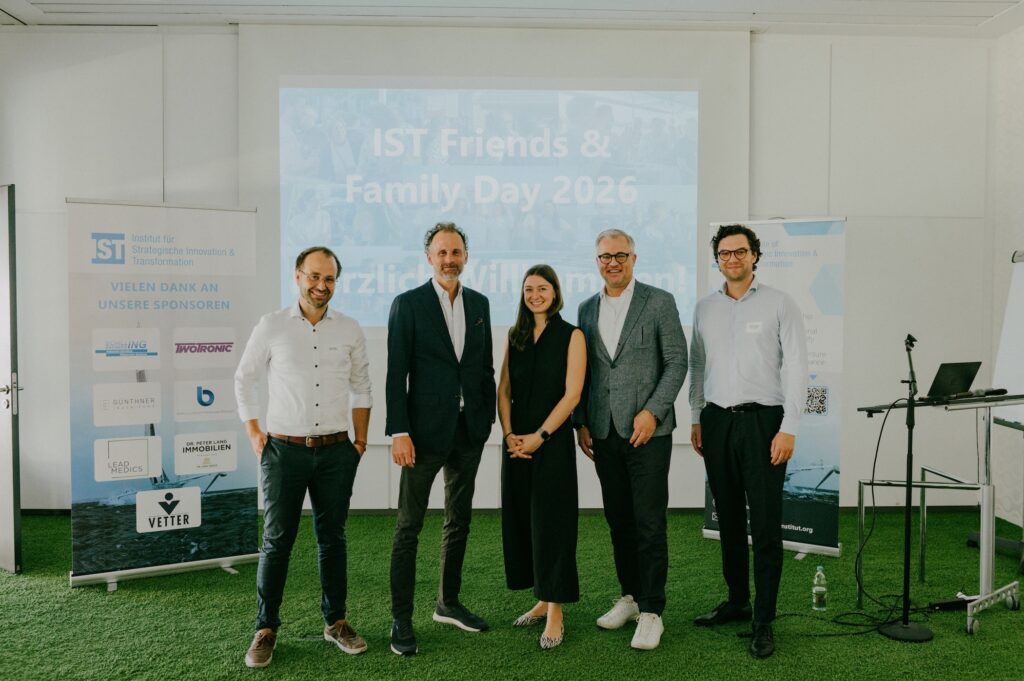
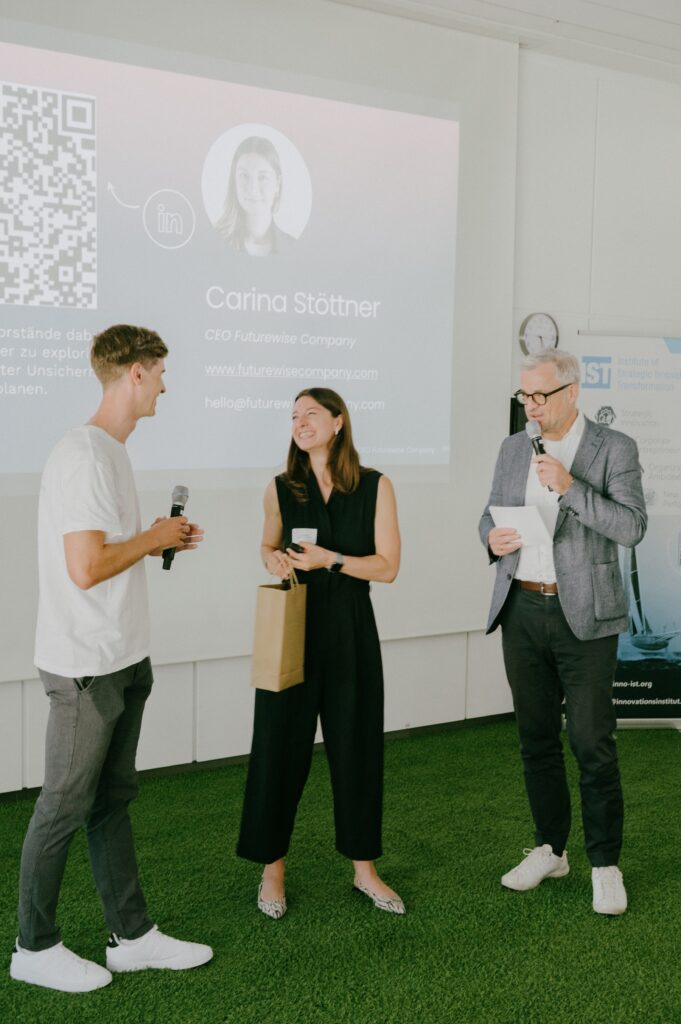
Vorgetragen hat Carina Stöttner diesen Impuls beim Friends & Family Day des IST in Konstanz am Bodensee. Am 9. und 10. Juli hatte das Institut zu zwei Tagen mit Unternehmer:innen, Alumni, Projektpartner:innen und langjährigen Wegbegleiter:innen geladen. Den Auftakt bildete ein Get-Together in der IHK Hochrhein-Bodensee, gestaltet von Lucas Sauberschwarz, Sebastian Strohmaier, Lukas Dieterle und Carina Stöttner. Das gemeinsame Thema: Resilienz in der Zukunft.

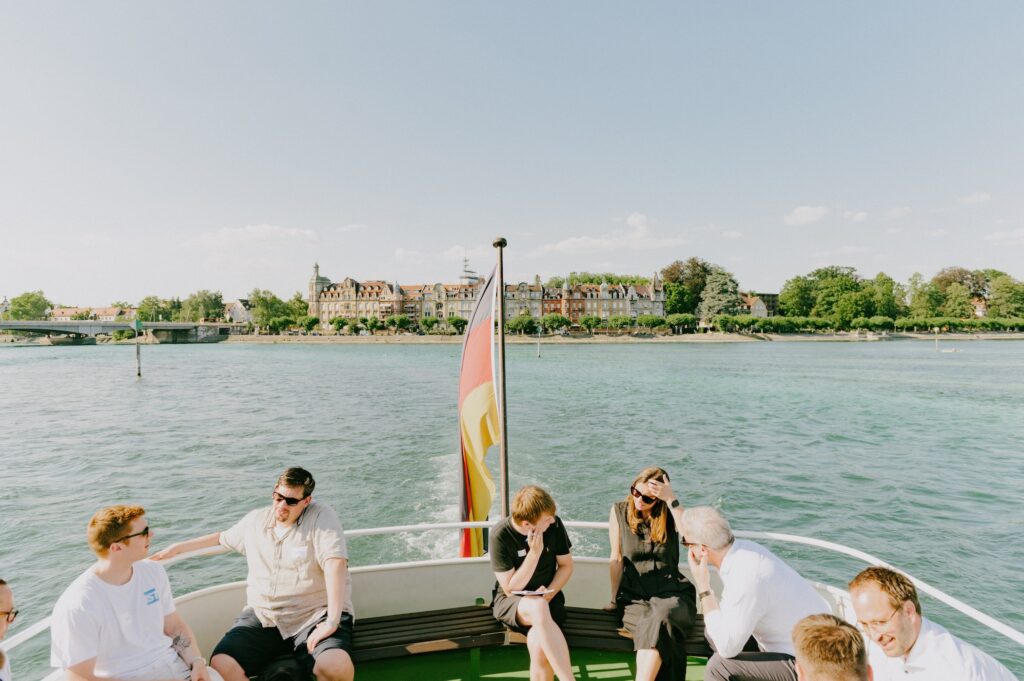
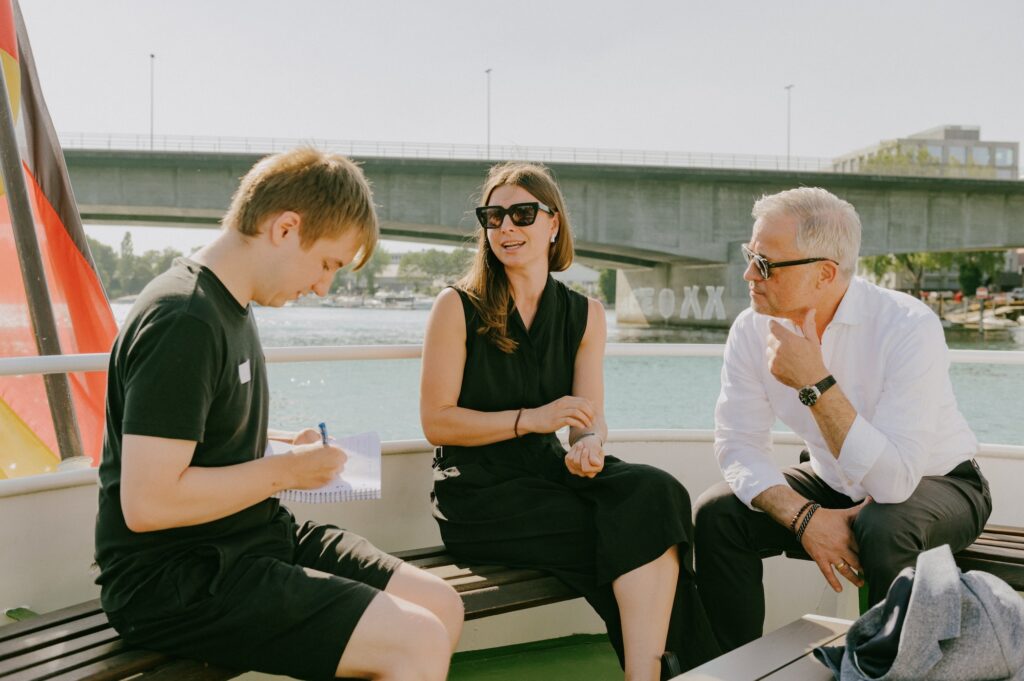
Nach den Impulsen ging es aufs Wasser: eine Rundfahrt über den Bodensee, gute Gespräche, ein entspanntes Anstoßen in einer Kulisse, die man sich kaum besser ausdenken könnte. Am Freitag klang der Friends & Family Day im Institut aus.

Was von diesen Tagen bleibt, ist für Stöttner vor allem eine Beobachtung: Die Bereitschaft, gemeinsam über unbequeme Zukünfte nachzudenken, ist da – und sie wächst. Genau diese Bereitschaft ist der Anfang von Resilienz. Nicht die Fähigkeit, die Zukunft vorherzusagen, sondern die Fähigkeit, auf mehr als eine vorbereitet zu sein.

Ein herzlicher Dank geht an das IST-Team für Einladung und Gastfreundschaft – und an alle, die mitgedacht, mitdiskutiert und mitgefeiert haben.

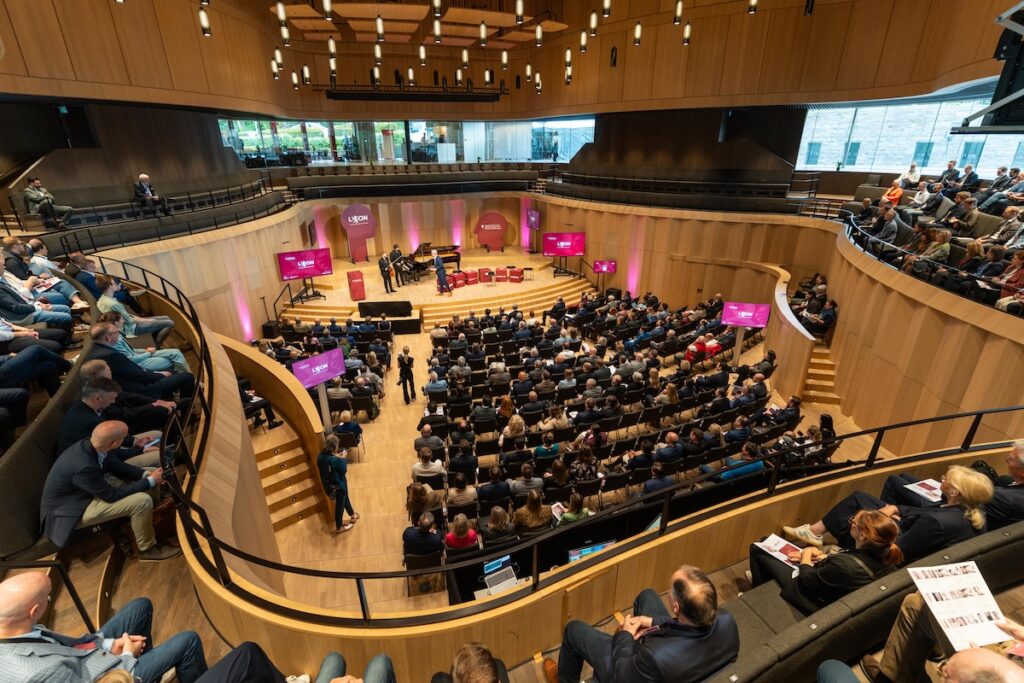
Carina Stöttner at the LEON Congress Hesse: in conversation with Hesse's Deputy Minister-President, generals, and CEOs

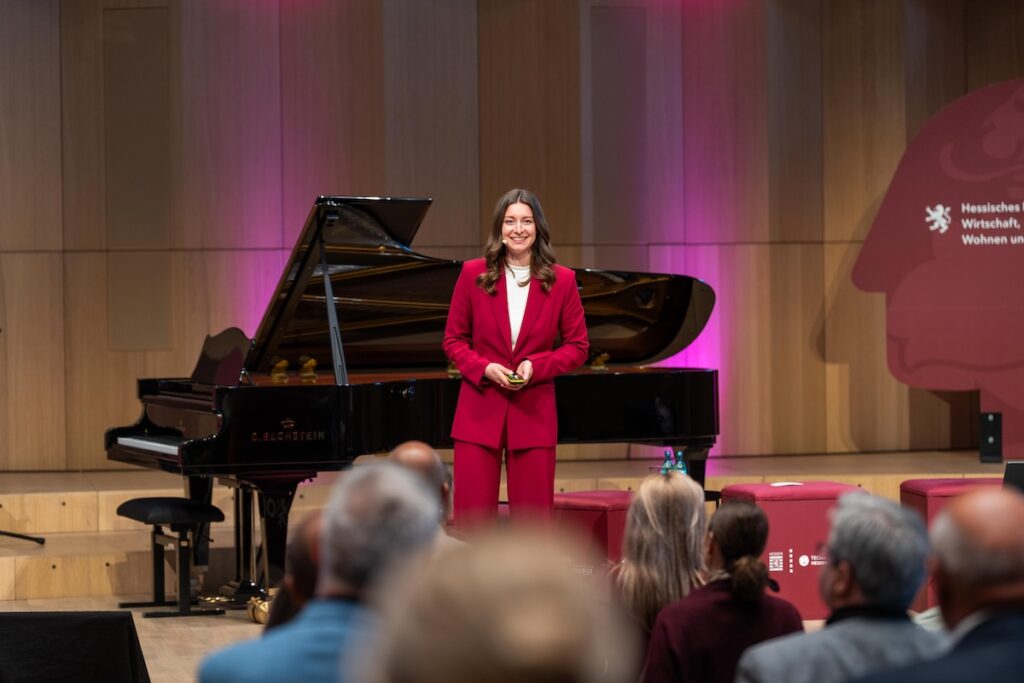
Photo: Jana Kay. From left: Brigadier General Holger Radmann, Prof. Dr.-Ing. Guido H. Baltes (moderator), Christoph Bernius (Divisional Board Member Cyber Risk, Commerzbank AG), Kaweh Mansoori (Minister of Economic Affairs), Carina Stöttner (CEO Futurewise Company), Alexander Laukenmann (Senior Executive VP Fraport), Peter R. Manolopoulos (CEO Schunk Group). A look back at the closing keynote by futures researcher Carina Stöttner at LEON 2026 – and what she had to say about the future of industrial work, resilience, and the risks of overcorrected protectionism. It is already past 5 p.m. at the Casals Forum in Kronberg. A long day of the congress lies behind the roughly one hundred decision-makers from business, science, politics, and the German armed forces. The day’s major themes – resilience, security, transformation financing, the Mittelstand as an anchor of stability – have been drawn out. Introduced by Prof. Dr.-Ing. Guido H. Baltes, Carina Stöttner takes the stage and poses the question: where could German industry and the economy develop in the future? Stöttner is a futures researcher – not a forecaster who extends charts into the next ten years, but someone who works with companies, ministries, and educational institutions to make desired futures concrete. Her closing keynote “The Future of Industrial Work” was not a full stop, but a starting signal: for a debate that has been conducted too technocratically in Germany for too long – and now needs a direction.

Resilience is not defense – but the ability to build the future

Throughout the day, resilience had been the leitmotif of LEON 2026. Minister of Economic Affairs Kaweh Mansoori had declared it the “decisive prerequisite for competitiveness.” Stöttner picked up the term – and turned it around. Resilience, as the thrust of her keynote went, is not the attempt to defend a status quo against an uncertain world. Resilience is the ability to remain capable of action despite – and with the help of – disruptive change, and to shape desirable futures. Those who understand resilience merely as a protective shield build bunkers. Those who understand it as the capacity to shape things build platforms. This set the frame for the keynote’s two major thematic strands: deeptech and radical innovation on the one side, education and the work of the future on the other.

Deeptech and radical innovation: Germany’s real question of competitiveness as a location

Germany has an innovation paradox. Strong in research, strong in patents, strong in its Mittelstand – and yet behind the USA and China in many key technologies. Stöttner delivered a diagnosis for this that resonated in the room: We have perfected incremental innovation, but have structurally weaned ourselves off radical innovation. Deeptech – that is, technologies with high scientific risk and a long development horizon, from quantum computing through synthetic biology to new energy and materials systems – requires different conditions than the optimizing innovation in which German industry grew large:
    • Longer capital horizons than the typical German financing mix offers today
    • A higher tolerance for failure, both within companies and in the logic of public funding
    • Closer interlocking of cutting-edge research and industrial scaling, as well as international cooperation
    • Talent that thinks across disciplines and can move between lab, code, and factory floor

The trade-offs of protectionism: When resilience becomes a cage

Stöttner devoted perhaps the most delicate part of her keynote to a question that is often circumvented in the current industrial-policy discourse: What happens when protectionism becomes too drastic? Resilience and sovereignty are legitimate, even compelling, goals. But they have a downside that must be named in honest industrial policy:
    • Loss of innovation through isolation. Those who reorganize critical intermediate products on a purely national basis pay not only higher unit costs, but also lose the competitive pressure and knowledge exchange that drives innovation. Closed systems age faster than open ones.
    • Strategic costs of the subsidy spiral. Every industry kept in the country by subsidy ties up resources that are then lacking elsewhere. Where investment goes into the production of efficient commodities, capacities no longer suffice for new high technologies. Industrial policy is always also an allocation decision against alternative futures.
    • Reciprocity risks. Protective measures provoke protective measures. An exporting nation like Germany loses structurally more in an escalating protectionism spiral – in social prosperity and in growth.
    • Democratic erosion. When “strategic industries” become a permanent category, the entanglements between the state and corporations grow, weakening competition and renewal in the long term.
Stöttner’s plea was not a naive call for free trade, but a plea for measure: resilience where it is relevant to security and not otherwise attainable – and openness everywhere else, because openness remains the true source of innovation and prosperity. The desirable future lies not in maximal self-sufficiency, but in smart, partnership-based sovereignty.

What remains: Three imperatives for the next decade

From Stöttner’s keynote, three imperatives can be distilled that apply to any industrial and economic location – and to Hesse in particular:
    1. Bet on deeptech and radical innovation. Incremental improvement is a mandatory exercise, no longer a competitive advantage. The real challenge is: financing, organizing, and scaling technologies with a ten- to fifteen-year horizon now.
    1. Think about education and work from the perspective of the life course. Not curricula, but learning architectures. Not qualification as a project, but learning as infrastructure.
    1. Balance resilience and openness. Sovereignty where it is indispensable. Openness everywhere else – as a source of innovation, talent, and economic strength.

About the congress: LEON 2026 in Kronberg, Hesse

On 6 May 2026, representatives from business, science, politics, and security institutions came together at the Casals Forum Wiesbaden for the new Hessian economic and industrial congress LEON. The leitmotif: resilience as the decisive question of competitiveness for the 21st century. Three brackets held the day together:
    • Resilience becomes a question of competitiveness – in the face of fragile supply chains, geopolitical tensions, and rising energy and security requirements.
    • Industry, innovation, and security can no longer be thought of separately. Key technologies such as AI or new materials have civilian and security-relevant applications.
    • From a problem of insight to a problem of implementation. “We do not have a problem of insight, but rather a task of implementation,” Minister of Economic Affairs Kaweh Mansoori put it in his opening remarks.

The keynotes and impulses at a glance

    • Kaweh Mansoori, Hessian Minister of Economic Affairs – Opening
    • Prof. Marcel Fratzscher (DIW Berlin) – Keynote: “After Us, the Future. A New Generational Contract for Freedom, Security, and Opportunity”
    • Peter R. Manolopoulos (CEO Schunk Group) – “What Makes Us Strong: Resilience in the Industrial Mittelstand”
    • Hans-Dieter Kemler (Member of the Board, Helaba) – “Transformation Financing in Germany – Hesse Leads the Way”
    • Alexander Laukenmann (Senior Executive VP Fraport) stepped in for Dr. Pierre Dominique Prümm (Member of the Board, Aviation, Fraport AG) – “Rethinking Resilience: How Aviation Shapes the Future in Turbulent Times”
    • Christoph Bernius (Divisional Board Member Cyber Risk, Commerzbank AG) – “Cyber Resilience: Europe’s Path to Security and Economic Strength”
    • Dr. Kai Beckmann (CEO Merck KGaA) – Video message on the future of Merck
    • Defence Panel with Major General Wolf-Jürgen Stahl (President, BAKS), Thomas Mailänder (EDAG), Daniel Zittel (Daimler Truck), Prof. Dr. Andreas Glas (UniBw Munich), Dr. Hans Christoph Atzpodien (BDSV), and Brigadier General Holger Radmann (Landeskommando Hesse): “Why We Need Strong Cooperation Between the Bundeswehr, Business, and Innovation”
    • Nathalia Schomerus (Legal Innovation Lead, Legora) – “Security and Resilience of German Industry with Regard to Cybersecurity”
    • Hesse’s industrial frontrunners – Presentation of six outstanding Hessian companies: JUMO, Energiesysteme Groß, Vacuumschmelze, Ponticon, Stephan Schmidt KG, and Alexander Binzel Schweisstechnik / Abicor Group
    • Carina Stöttner, futures researcher – Closing keynote: “The Future of Industrial Work”
The stage program was complemented by 13 breakout sessions on topics such as reducing bureaucracy, cybersecurity, sustainable industry, transformation financing, and security-policy cooperation – as well as a poetic-musical wrap-up at the close. LEON is designed as a long-term platform. It sees itself, in Mansoori’s words, as the prelude to a dialogue meant to shape the years ahead: “The future of Hesse as a location for innovation and industry is being decided now.”

What is a driver? What is a trend?

Drivers: a definition

Drivers are the causes behind a trend. They describe the fundamental forces that set change in motion or accelerate it. A driver is an underlying dynamic that enables, forces or structures change.

Typical characteristics:

  • often operate over the long term
  • are frequently structural or systemic
  • aren’t always directly visible
  • can usually be assigned to a STEEP category

Examples

  • Demographic change
  • Technological progress (AI and automation, for instance)
  • Climate change
  • Geopolitical shifts in power
  • Changing values (security versus freedom, for instance)

 Drivers answer the question: “Why is something changing?”

Trends: a definition

Trends are the visible expressions of change.
They describe concrete developments, stable over a certain period, that emerge from one or more drivers.
A trend is an observable pattern in behavior, markets, technologies or social practice.

Typical characteristics:

  • are visible and can be described concretely
  • develop over a limited period (and can gain or lose momentum)
  • can be illustrated with examples, data or narratives
  • usually emerge from the interplay of several drivers

Examples

  • Remote and hybrid work
  • Electric mobility
  • Personalized medicine
  • The circular economy
  • Subscription models replacing ownership

Trends answer the question: “How does change actually show up?”