Tag: Foresight

The Delphi Method in Foresight - and How We Use It

Originally developed at the RAND Corporation in the 1950s, the Delphi method is a structured way to gather and synthesize expert opinion on questions about the future – particularly where data is scarce and uncertainty is high. It is a multi-stage, survey-based approach used in foresight, typically designed to arrive at a stable assessment through controlled feedback across several rounds, while avoiding the influence of dominant individuals.

In foresight, Delphi is less about asking open questions and more about testing sharply formulated hypotheses about how the future might unfold. It allows us to systematically confront these hypotheses with diverse expert perspectives – across hierarchies, geographies, and sectors – and to understand not only where views converge, but where they meaningfully diverge. The goal is not a single prediction, but a clearer map of plausible futures, underlying assumptions, and critical uncertainties.

At the Futurewise Company, we have adapted the method to fit strategic work with executives. Instead of anonymous multi-round surveys, we run Delphi as semi-structured 1:1 interviews based on hypotheses derived from earlier foresight tools such as Futures Wheels or scenario matrices. This approach preserves comparability across interviews while allowing for depth, nuance, and unexpected insights. We then synthesize these expert perspectives to refine scenarios, explore future growth opportunities, and build decision-relevant views on strategic risks and opportunities.

Starting With Hypotheses

Before we ever talk to an expert, we need to know what we are actually trying to learn. That foundation comes from earlier foresight work — typically a Futures Wheel, a 2×2 scenario matrix, or both.

These tools generate something useful: a map of the drivers, dependencies, and fields that matter for our research question. From that map, we extract two things. First, the topical territory we need to cover. Second, the conditions that are simultaneously high impact and high uncertainty — the places where the future is genuinely unsettled and where expert input will move our thinking the most.

This, for how we conduct Delphi interviews at the Futurewise Company, is the raw material for hypothesis formulation.

A hypothesis like “manufacturing will change in Germany” is useless. Nobody will disagree with it, and nobody will say anything interesting in response. Compare it to: “In 2036, most manufacturing and production will be outsourced. What remains in Germany is R&D only.”

That version is specific. It commits to a timeframe, a geography, and a structural claim. It is also slightly provocative — and that is intentional. Vague hypotheses get vague answers. Provocative hypotheses force experts to either defend or dismantle the claim, and either response gives you signal.

The rule we follow: be specific, and lean toward the provocative end. If your hypothesis could be the headline of a contrarian opinion piece, you are probably in the right zone.

Choosing the Right Experts

Once the hypotheses are sharp, we work backwards from them to figure out who needs to weigh in. A good Delphi panel is not just “smart people we can reach.” It is a deliberately structured group designed to surface different angles on the same question.

We think about diversity along several axes:

  • Hierarchy. Strategic voices (C-suite, policy leads) see the system. Operational voices (engineers, plant managers, frontline analysts) see the friction. Both are necessary, and they often disagree in productive ways.
  • Geography. A question about German manufacturing looks different from Munich, Shenzhen, and Detroit.
  • Organizational background. We aim for a mix across academia, government, media, industry, civil society, think tanks, and consultancies. Each sector carries its own incentives and blind spots, and the contrast is where insight lives.

The goal is not balance for its own sake. It is to make sure that when consensus does emerge, it is meaningful – and when disagreement emerges, we know exactly which fault lines are doing the work.

Finding and Reaching Experts

The hardest part is often just getting people to talk to you. A few channels work consistently for us:

LinkedIn is the obvious starting point, but the higher-yield move is browsing speaker lists from relevant conferences. People who agree to speak publicly on a topic are, by definition, experts in their field and willing to talk about it — a rarer combination than it sounds.

Internal networks are underrated. Your CEO, your shareholders, and your sales team often have networks that took decades to build. Use them. A warm introduction from them beats a cold message every time.

Beyond that: scientists who have published recently in the area, VCs investing in the space (they have done their own diligence and are usually happy to share a slice of it), and journalists covering the beat. Journalists in particular tend to know a lot of people and have a strong sense of who is worth listening to versus who is just loud.

Designing the Questions

Generic questions produce generic answers. The framing techniques below are designed to get experts out of their default talking points and into more useful territory.

Post-mortem questions project the panelist into a future where something has already happened, and ask them to explain it. “It is 2036, and Germany has lost its position as a manufacturing hub. What were the three decisions in the 2020s that caused this?” This bypasses the natural tendency to hedge and forces a causal narrative.

Best-case scenario questions do the inverse. “Imagine the optimistic version of 2036 for German industry. What does it look like, and what had to go right?” Useful for surfacing what experts secretly hope for, which is often a better signal than what they predict.

Lived-reality questions ground the abstract in the concrete. “You wake up in 2036 and walk into a production site. What has changed since 2026?” Sensory, specific framing pulls people away from buzzwords and toward detail.

Counterfactual futures stress-test dependencies. “If Person X had not remained in office after 2028, what would have shifted in the years that followed?” This exposes which assumptions in an expert’s worldview are actually load-bearing — and which are just decoration.

Running the Interviews

In our case, we run the panel as semi-structured 1:1 interviews. Fully structured interviews are too rigid; you miss the digressions where the real insight often lives. Fully unstructured ones make cross-comparison impossible. Semi-structured is the sweet spot.

We build a question guideline organized around the hypotheses, clustered by theme. Not every expert gets every question — a regulatory scholar and a factory floor manager have different things to offer, and forcing them through identical scripts wastes everyone’s time. But within each cluster, we keep enough overlap across panelists that we can compare answers meaningfully later.

Every interview is recorded and transcribed. This is non-negotiable. Memory distorts, and the analysis phase depends on having the actual words.

Analyzing What You Heard

The analysis is essentially a search for two patterns: similarity and difference.

Where do experts converge? Convergence across a diverse panel — different sectors, hierarchies, geographies — is a strong signal. It does not mean they are right, but it means a particular view of the future is widely held by people who have thought hard about it. That is worth knowing, and worth challenging.

Where do they diverge? This is usually the more interesting finding. Sharp disagreement often maps onto the high-uncertainty zones we identified at the start, and the shape of the disagreement matters. Are the academics aligned against the industry voices? Are the strategists split from the operators? Is it a regional pattern? Each of these tells you something different about what the real fault lines in your topic actually are.

Our recommendation: Read between the lines: sometimes the most important things get mentioned in passing – a throwaway aside, a half-finished thought – and AI-driven analysis tends to miss exactly those moments, so during the interview take notes, especially on the minor mentions that feel quietly major.

The output of a Delphi round is rarely a clean answer. It is a more textured map: clearer on which futures have broad expert backing, clearer on which ones are genuinely contested, and clearer on what would have to change for one trajectory to win out over another.

Why Delphi?

Delphi works because it does something neither pure data analysis nor pure intuition can do on its own. It systematically harvests tacit knowledge — the kind that lives in the heads of people who have spent careers in a field — and structures it well enough that you can compare, contrast, and act on it.

What Is a Futures Wheel?

A simple tool to think complex thoughts about the future

The Futures Wheel is one of those rare foresight tools that looks deceptively simple — and then quietly forces you to confront how non-linear the future really is.

Originally developed in 1971 by Jerome C. Glenn, the Futures Wheel has guided futurists, strategists, and decision-makers for more than five decades in exploring the ripple effects of change. It is also documented in the Futures Research Methodology (FRM), one of the core reference works in professional foresight.

At its core, the Futures Wheel helps individuals and organizations move beyond linear cause-and-effect thinking, and instead map how one change can cascade across systems, sectors, and societies.

The basic idea

A Futures Wheel is a structured, visual brainstorming method used in strategic foresight to explore the direct and indirect consequences of a specific trend, event, decision, or innovation.

It asks:

“And then what?”
“And what follows from that?”
“Who else is affected, and how?”

The result looks a bit like a spider web or a set of concentric circles — but conceptually, it represents chains of impact spreading outward over time.

How a Futures Wheel is structured

The structure is deliberately simple:

1. The center: the change

At the core sits a single, clearly defined change, often phrased as a thesis:

  • A new technology
  • A regulatory shift
  • A strategic decision
  • A societal or economic trend

Example: “Autonomous trucks become mainstream in Europe.”

2. First-order consequences

In the first ring around the center, you map direct, immediate effects — the things that happen because the change occurs.

These are often the most obvious impacts.

3. Second- and third-order consequences

From each first-order consequence, you then ask: “What does this lead to?”

These indirect effects populate the outer rings:

  • Effects of effects
  • Side effects
  • Feedback loops
  • Unintended consequences

What problem does the Futures Wheel solve?

Most strategic thinking fails in one of two ways:

  • It stays too linear (“If X happens, Y follows”).
  • It focuses only on first-order effects, missing the real strategic implications.

The Futures Wheel is designed to do the opposite. Its purpose is to:

  • Surface complex, interconnected consequences
  • Reveal unexpected risks and opportunities
  • Challenge optimistic or pessimistic single-story futures
  • Make implicit assumptions visible

In short: it helps teams think systemically about change.

Where and how it is used

The Futures Wheel is widely applied across contexts, including:

  • Strategy & innovation: exploring second-order effects of new products or business models
  • Technology foresight: assessing societal, economic, and regulatory impacts of emerging tech
  • Policy & regulation: anticipating unintended consequences of laws or reforms
  • Organizational decision-making: stress-testing major strategic moves

It is especially useful early in a foresight or strategy process, before numbers, roadmaps, or KPIs narrow the field of vision.

Was ist Futures Thinking?

Futures Thinking, auch bekannt als Strategisches Zukunftsdenken oder Foresight Thinking, ist ein interdisziplinärer und strategischer Ansatz, um sich mit der Vielfalt möglicher Zukünfte auseinanderzusetzen. Anders als bei klassischen Prognosen oder linearen Zukunftsmodellen geht es beim Futures Thinking nicht um Vorhersagen, sondern um den aktiven Umgang mit Unsicherheit, Komplexität und Wandel.

Im Zentrum steht die Fähigkeit, Multioptionalität – also mehrere denkbare Zukünfte – anzuerkennen und daraus Erkenntnisse für die Gegenwart abzuleiten.

„Futures Thinking darf nicht als sinnloser Versuch missverstanden werden, die Zukunft vorherzusagen – denn diese ist per Definition nicht vorhersagbar. Vielmehr vermittelt Futures Thinking die Fähigkeit, mit Unsicherheiten umzugehen und Komplexität zu bewältigen. Es befähigt Menschen dazu, ihre bevorzugten Zukunftsszenarien aktiv zu gestalten und mitzugestalten.“

-Canina, Bruno & Monestier: Futures Thinking (SpringerLink)

Futures Thinking ist eine methodisch gestützte Denkweise, die Organisationen, Regierungen und Individuen hilft, mögliche zukünftige Veränderungen und Unsicherheiten zu verstehen und damit umzugehen.

Wer nutzt Futures Thinking?

Die britische Regierung nutzt Futures Thinking, um politischen Entscheidungen eine langfristige Perspektive zu geben. Laut einem offiziellen Leitfaden der Regierung bieten Methoden der Zukunftsforschung „einen strukturierten Ansatz, der robust ist und auf langfristige Veränderungen reagiert.“ (GOV.UK, 2022)

Auch Unternehmen wie E.ON setzen auf Futures Thinking, um ihre Branche auf die Zukunft auszurichten. Sie beschreiben Futures Thinking sogar als dieFähigkeit des Jahrhunderts:

„Futures thinking is a key skill for this century.“

– Hiromi Valenzo, Foresight-Expertin bei E.ON (E.ON Innovation)

Welche Methoden gibt es im Futures Thinking?

Häufig genutzte Tools sind:

  • Szenarienentwicklung
  • Horizon Scanning (Trends und Zukunftsentwicklungen systematisch recherchieren)
  • Backcasting (Rückwärtsdenken vom Ziel)
  • Futures Wheel (Konsequenzen verschiedener Zukunftsentwicklungen durchdenken)
  • Delphi-Methode (Mehrstufige, qualitative Interview-Methode)
  • Cross Impact Analysis (Verknüpfung verschiedener Trends und deren Auswirkungen)

Was unterscheidet Futures Thinking von Trendforschung?

Statt sich auf einzelne Trends oder Detailprognosen zu fokussieren, rückt Futures Thinking große gesellschaftliche, technologische, wirtschaftliche oder ökologische Dynamiken in den Fokus. Das Ziel ist es, neue Handlungsräume zu eröffnen und den strategischen Horizont zu erweitern.

Futures Thinking ist ein strategischer Ansatz zur Betrachtung der Zukunft aus verschiedenen Blickwinkeln. Im Zentrum steht die Fähigkeit, Multioptionalität anzuerkennen und Unsicherheit sowie Komplexität aktiv zu gestalten, statt die Zukunft linear vorherzusagen.

Wünschenswerte Zukünfte können, müssen aber nicht im Zentrum stehen: Entscheidend ist die Erweiterung des Denk- und Handlungshorizonts durch die systematische Auseinandersetzung mit verschiedenen möglichen Zukünften.

Was ist der Unterschied zwischen Futures Thinking und Futures Literacy?

Futures Thinking ist ein Denkansatz und Methodenset.
Futures Literacy ist eine Grundkompetenz, um mit Zukünften reflektiert umgehen zu können:

„Futures Literacy hilft Menschen zu verstehen, warum und wie wir die Zukunft nutzen, um uns vorzubereiten, zu planen und mit der Komplexität und Neuartigkeit unserer Gesellschaften umzugehen.“ (UNESCO)

Why I founded the Futurewise Company

For years I have been working with executive boards and decision-makers. Through Covid, a war in Europe, the energy crisis, inflation, and shattered supply chains. Amid all these upheavals, I have experienced one thing again and again: leadership no longer takes place under stable conditions, but under permanent uncertainty.

In recent months, I have conducted many of these conversations even more consciously. I asked: What is really preoccupying you right now?

The answers are astonishingly similar.

When proven business models no longer hold

Many business models – especially in our European flagship industries – are beginning to wobble. For decades, it was enough to continuously optimize existing products, processes, and structures. Efficiency was the growth driver.

The last few years, however, have shown: that is no longer enough. Optimization alone creates no new growth when markets, technologies, and geopolitical conditions shift simultaneously.

Growth does not arise in the obvious business fields, because these are heavily contested and therefore hardly profitable. The blue oceans of the future, by contrast, are not (yet) apparent at first glance – and are thus often associated with high risk. The truly effective levers therefore frequently lie precisely where uncertainty reigns – and thus also fear.

To seize these opportunities, companies must learn to break away from pure process and optimization thinking and to think more radically again. This is not a purely strategic task, but also a cultural one. The step from maximum safeguarding toward consciously taken risk is difficult, especially for organizations that have been optimized for stability for decades.

This is exactly where futures thinking comes in: as a structured space for thinking and decision-making for radical innovation.

When not deciding becomes the greatest danger

At the same time, I am experiencing a second thing, almost even more urgent: making decisions is becoming ever more difficult.

The world is not only complex, but highly volatile. Developments do not proceed linearly, forecasts quickly lose their validity. The costs of a wrong decision have risen massively – financially, politically, culturally. In many industries, a great deal is at stake, often the economic substance itself.

The consequence: things are postponed, put on hold, analyzed further. Better to make no decision than the wrong one. But that is precisely what is fatal in a time when other players have long been trying to gain sovereignty over our economic and technological future.

Scenario work comes in at exactly this point. It creates no certainty in the classic sense, but orientation. It helps to systematically think through possible futures, to weigh options against one another, and to make decisions not from the gut, but out of an expanded understanding of the future.

Why I want to do my part

The founding of the Futurewise Company arose from precisely these observations.
I want to do my part to help European companies become capable of action again, not despite uncertainty, but with it.

My goal is to understand resilience not merely defensively, but as the foundation for new growth. Not as a retreat to what has proven itself, but as a conscious opening toward new futures. Toward business models that will still hold in five, ten, or fifteen years.

Futurewise supports leadership teams in opening up exactly these spaces: for radical thinking, for well-founded decisions, and for an economy that once again shapes its own future.

Yours,

Carina Stöttner

Wie können Unternehmen Szenarien nutzen?

Wenn Unternehmen über Zukunft sprechen, tun sie das oft implizit so, als gäbe es die eine Zukunft: eine Prognose, eine Zielzahl, einen strategischen Plan. Doch gerade in Zeiten hoher Unsicherheit greift dieses Denken zu kurz. Märkte, Technologien und gesellschaftliche Rahmenbedingungen entwickeln sich nicht linear – und genau hier kommen Szenarien ins Spiel.

Was sind Szenarien?

Szenarien sind keine Prognosen und keine Vorhersagen. Sie beschreiben alternative, in sich konsistente Zukünfte, die auf unterschiedlichen Annahmen über zentrale Einflussfaktoren beruhen.

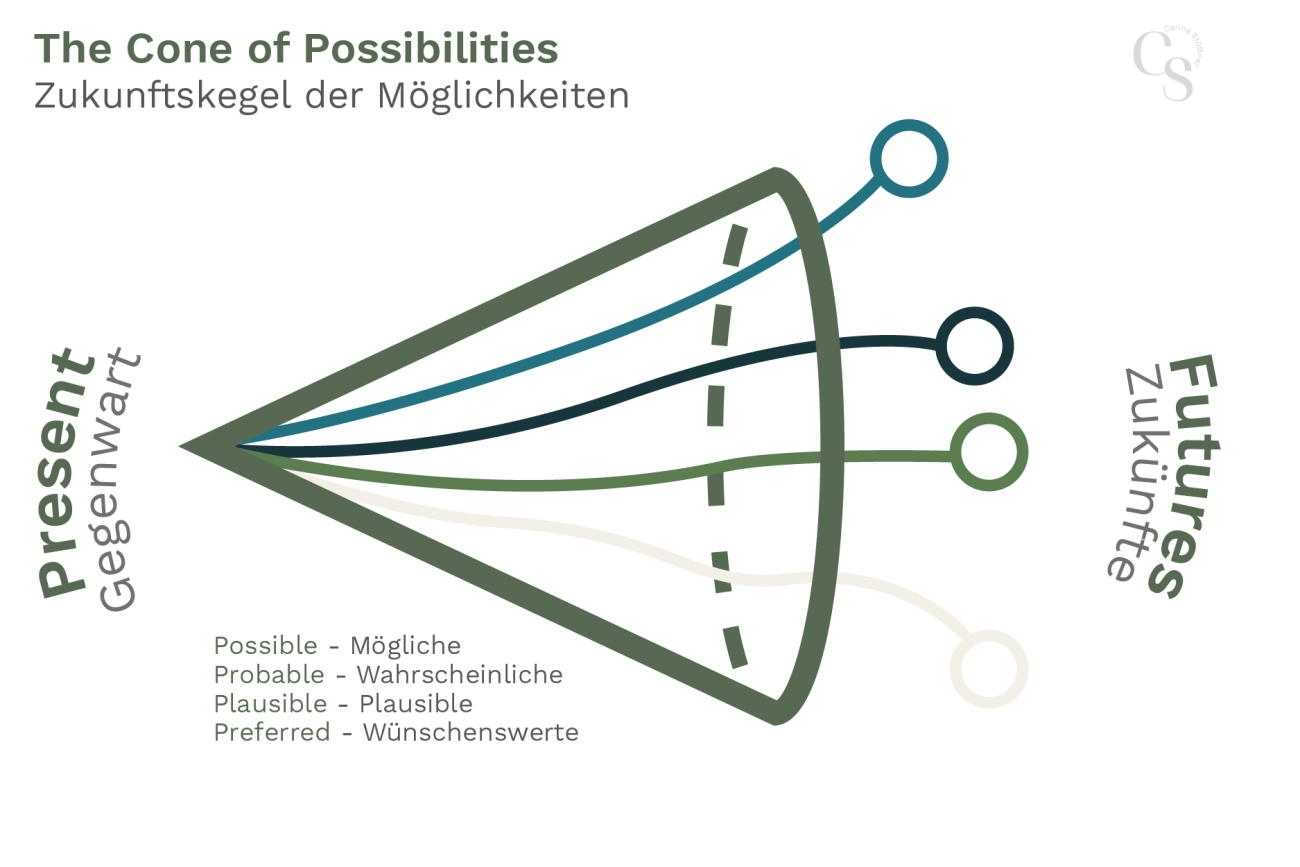
In der deutschsprachigen Zukunftsforschung – etwa bei Rolf Kreibich – wird Zukunft häufig in unterschiedliche Kategorien unterteilt:

  • mögliche Zukünfte: alles, was prinzipiell eintreten könnte
  • wahrscheinliche Zukünfte: das, was unter heutigen Annahmen als plausibel gilt
  • wünschenswerte Zukünfte: das, was wir aktiv anstreben wollen

Szenarien bewegen sich genau in diesem Spannungsfeld. Sie machen sichtbar, dass Zukunft kein feststehendes Ziel ist, sondern ein Gestaltungsraum, in dem Entscheidungen von heute Weichen stellen.

Wozu nutzt man Szenarien?

1. Ein klareres Bild möglicher Zukünfte gewinnen

Szenarien helfen, Komplexität zu strukturieren. Statt einer diffusen „Zukunftsunsicherheit“ entstehen konkrete Bilder:

  • Wie könnten sich Märkte entwickeln?
  • Welche Kundenbedürfnisse könnten dominieren?
  • Welche externen Kräfte verändern unser Spielfeld?

Diese Bilder ersetzen keine Entscheidung – aber sie schaffen eine gemeinsame mentale Landkarte, auf der Entscheidungen getroffen werden können.

2. Klarheit im Führungsteam schaffen

In vielen Führungsteams wird zwar viel über Zukunft gesprochen, aber selten überprüft, ob alle über dieselbe Zukunft sprechen. Szenarien legen implizite Annahmen offen:

  • Meinen wir Wachstum im bestehenden Markt – oder in völlig neuen Feldern?
  • Gehen wir von Stabilität aus – oder von tiefgreifender Disruption?

Szenarien machen Unterschiede sichtbar, ohne sie sofort auflösen zu müssen. Allein diese Transparenz schafft oft enorme Klarheit und verbessert die Qualität strategischer Diskussionen.

Szenarien als Projektionsfläche für Strategie und Initiativen

Ein besonders wirkungsvoller Aspekt von Szenarien ist ihre Funktion als Projektionsfläche. Bestehende Initiativen, Projekte oder Investitionen lassen sich gezielt gegen verschiedene Szenarien spiegeln:

  • Für welches Szenario ist diese Initiative eigentlich sinnvoll?
  • Welchen Kunden adressieren wir dort?
  • Was passiert, wenn wir im „falschen Szenario“ investieren?

So wird sichtbar, wo Aktivitäten am gewünschten Ziel vorbeilaufen – oder wo Ressourcen auf Annahmen beruhen, die implizit bleiben. Szenarien schaffen damit nicht nur Orientierung, sondern helfen auch, strategische Inkonsistenzenaufzudecken.

Szenarien als Exploration neuer Geschäftsmöglichkeiten

Szenarien sind nicht nur ein Instrument zur Absicherung, sondern auch zur Exploration. Indem alternative Zukunftsbilder bewusst durchgespielt werden, entstehen neue Fragen:

  • Welche Geschäftsmodelle wären in diesem Szenario attraktiv?
  • Welche Kompetenzen würden wir dort benötigen?
  • Wo entstehen neue Wertschöpfungsketten oder Kundensegmente?

Gerade jenseits des bestehenden Kerngeschäfts entfalten Szenarien ihre kreative Kraft. Sie legitimieren es, über Möglichkeiten nachzudenken, die heute noch unrealistisch erscheinen – aber morgen strategisch relevant sein könnten.

Risiken antizipieren, bevor sie akut werden

Ein weiterer zentraler Nutzen von Szenarien liegt in der frühzeitigen Antizipation von Risiken. Statt erst zu reagieren, wenn Veränderungen bereits eingetreten sind, ermöglichen Szenarien ein vorausschauendes Fragen:

  • Welche Entwicklungen könnten unser Geschäftsmodell unter Druck setzen?
  • Wo liegen potenzielle Brüche, Abhängigkeiten oder Kipppunkte?
  • Welche Frühindikatoren sollten wir beobachten?

Risiken werden dadurch nicht eliminiert – aber sie werden denkbar, diskutierbar und handhabbar.

Wir nutzen Szenarien in einer Vielzahl unserer Projekte.

Warum Offsites für Vorstände immer wichtiger werden

Der Begriff Offsite ist längst kein Buzzword mehr. Immer mehr Vorstände ziehen sich bewusst für ein oder mehrere Tage aus dem operativen Alltag zurück – raus aus dem Büro, weg von E-Mails, Termindruck und Status-Meetings. Doch was genau ist ein Vorstands-Offsite eigentlich – und warum erlebt dieses Format gerade so viel Zuspruch?

Was ist ein Vorstands-Offsite?

Ein Vorstands-Offsite ist ein bewusst gestalteter strategischer Arbeitsraum außerhalb des Tagesgeschäfts. Im Fokus stehen nicht operative Entscheidungen, sondern die großen Fragen:

  • Ist unsere strategische Richtung noch die richtige?

  • Welche Annahmen über Markt, Kunden und Wettbewerb tragen (noch)?

  • Wo müssen wir nachschärfen, wo neu denken?

Offsites schaffen Distanz – räumlich wie mental. Genau diese Distanz ist oft notwendig, um festgefahrene Denkmuster zu verlassen und wieder strategische Klarheit zu gewinnen.

Warum immer mehr Vorstände auf Offsites setzen

Die Rahmenbedingungen haben sich fundamental verändert. Märkte werden volatiler, technologische Entwicklungen schneller, geopolitische und gesellschaftliche Faktoren schwerer vorhersehbar. Klassische Vorstandssitzungen stoßen hier an ihre Grenzen.

Offsites bieten:

  • Zeit zum Denken, nicht nur zum Entscheiden

  • Alignment im Gremium, jenseits formaler Beschlusslagen

  • Raum für offene Diskussionen, Unsicherheiten und kontroverse Perspektiven

Kurz: Offsites werden zum strategischen Resonanzraum in Zeiten permanenter Unsicherheit.

Warum Foresight im Offsite besonders wirksam ist

Viele Offsites drehen sich um Strategie – aber häufig bleibt der Blick erstaunlich nah an der Gegenwart. Zahlen, Forecasts und bekannte Wettbewerber dominieren. Genau hier entfaltet Foresight seine Stärke.

Foresight hilft, Strategie nicht nur als Fortschreibung bestehender Trends zu verstehen, sondern als bewusste Auseinandersetzung mit möglichen, wahrscheinlichen und wünschbaren Zukünften. Statt nur zu fragen „Was passiert nächstes Jahr?“, geht es um:

  • Welche grundlegenden Verschiebungen prägen unseren Markt?

  • Welche Annahmen könnten sich als falsch erweisen?

  • Welche Zukünfte müssen wir heute schon mitdenken?

Gerade im Offsite-Kontext entsteht dadurch ein gemeinsames Zukunftsverständnis im Vorstand – eine oft unterschätzte Grundlage für tragfähige Entscheidungen.

Unsicherheit produktiv nutzen

Foresight macht Unsicherheit nicht kleiner, aber handhabbar. Szenarien, Zukunftsbilder und strukturierte Exploration helfen, sich nicht von Unsicherheit lähmen zu lassen, sondern sie als strategische Ressource zu nutzen. Entscheidungen werden dadurch robuster – nicht weil sie sicherer sind, sondern weil sie mehrere mögliche Zukünfte berücksichtigen.

Unser Ansatz: Der beste Outcome für den Vorstand

Die Futurewise Company verfolgt dabei ein klares Ziel: den bestmöglichen Outcome für Vorstände und Führungsgremien zu erzielen. Kein Methoden-Fetischismus, keine Standardformate – sondern das, was in der konkreten Situation wirklich hilft.

Methodisch vielseitig – strategisch klar

Je nach Fragestellung kombinieren wir im Offsite-Setting unterschiedliche Ansätze:

  • Foresight, um langfristige Entwicklungen, Unsicherheiten und Szenarien zu erschließen

  • Change Management, um strategische Einsichten anschlussfähig zu machen

  • Innovationsmanagement, um neue Geschäftsfelder und Optionen zu explorieren

  • Organisationsentwicklung, um Struktur, Kultur und Entscheidungslogiken mitzudenken

Diese Methoden setzen wir nicht nebeneinander, sondern im Wechsel ein – immer orientiert an der Dynamik des Gremiums und der strategischen Fragestellung.

Der Challenger-Blick aufs Big Picture

Ein zentraler Bestandteil unserer Arbeit ist der Challenger-Blick. Wir moderieren nicht nur, wir spiegeln, hinterfragen und erweitern Perspektiven. Immer mit dem Blick auf das große Ganze:

  • Wohin entwickelt sich der Markt wirklich?

  • Welche externen Kräfte werden heute unterschätzt?

  • Welche strategischen Optionen werden (noch) nicht gesehen?

Gerade Vorstände profitieren davon, einen Sparringspartner zu haben, der nicht Teil der internen Logik ist – und genau deshalb andere Fragen stellen kann.

Why foresight and family businesses fit together so well

Symbolic image of family businesses: Carina Stöttner at the Otto Group’s #CRX24 with then-CEO Alexander Birken

Family businesses tick differently. Anyone who works with them regularly quickly senses it: here it is not just about quarterly figures, but about responsibility, continuity, and the question of what the company should be in ten, twenty, or thirty years. That is precisely why family businesses are often surprisingly foresight-minded – even if they would not always call it that themselves.

Three reasons why we particularly enjoy working with family businesses

1. Thinking in generations
While many organizations are heavily oriented toward short-term goal achievement, family businesses often think in generations. Decisions are measured not only by whether they work today, but by whether they are also viable for the next generation. This long-term thinking is the ideal foundation for strategic futures work.

2. Long-term stability over short-term profit
In family businesses, the sustainable stability of the company often takes precedence over short-term return optimization. That creates room: for strategic debates, for uncomfortable questions – and for engaging with possible futures that lie beyond the status quo.

3. Economic reserves enable risk-taking
Many family businesses have solid economic cushions. That does not mean they act carelessly – on the contrary. But it does mean that they can afford to take targeted risks, to explore new fields, and occasionally to pursue trains of thought whose return is not immediately measurable.

Why foresight work is particularly worthwhile in family businesses

As forward-looking as family businesses often are in their attitude – strategically, much nonetheless remains in optimization mode.

Strategy as fine-tuning rather than reinvention
In many family businesses, strategy primarily means: improving existing business models, becoming more efficient, securing market share. Radical reinvention or systematic exploration of new business fields takes place more rarely. This is exactly where foresight comes in: not as a replacement for existing strategies, but as an expansion of the space for thinking.

Success breeds tunnel vision
Many family businesses have been successful in the market for decades – in some cases for more than a hundred years. This success is an enormous strength, but it can also lead to tunnel vision. When a business model has worked well for a long time, it is hard to imagine that the rules of the game could change fundamentally. Here, foresight deliberately introduces an outside perspective: across industries, across markets, and fed by insights from other industries and customer markets.

Niches under pressure to change
Hidden champions in particular often operate in very specific niches. These niches are highly profitable today – but not necessarily future-proof. New technologies, regulatory changes, or shifting customer needs can cause a niche to lose significance in a new market environment. Foresight helps to recognize early on which niches remain stable, which transform – and where new ones might emerge.

Globally positioned – but often without a structured future radar

Many family businesses have long been active globally. They know international markets, serve different customer needs, and are open to new things. What is often lacking, however, are structured tools to systematically analyze this diversity and translate it into strategic options.

This is where foresight unfolds its full effect:

  • Future trends are not considered in isolation, but in their interactions.
  • Uncertainties are not suppressed, but deliberately used to develop robust strategies.
  • New markets, customer needs, and business models are not discovered by chance, but explored in a targeted way.

With our structured futures-thinking approach, the future thus becomes not an abstract vision, but a concrete strategic field of work.

To our offering

What is a driver? What is a trend?

Drivers: a definition

Drivers are the causes behind a trend. They describe the fundamental forces that set change in motion or accelerate it. A driver is an underlying dynamic that enables, forces or structures change.

Typical characteristics:

  • often operate over the long term
  • are frequently structural or systemic
  • aren’t always directly visible
  • can usually be assigned to a STEEP category

Examples

  • Demographic change
  • Technological progress (AI and automation, for instance)
  • Climate change
  • Geopolitical shifts in power
  • Changing values (security versus freedom, for instance)

 Drivers answer the question: “Why is something changing?”

Trends: a definition

Trends are the visible expressions of change.
They describe concrete developments, stable over a certain period, that emerge from one or more drivers.
A trend is an observable pattern in behavior, markets, technologies or social practice.

Typical characteristics:

  • are visible and can be described concretely
  • develop over a limited period (and can gain or lose momentum)
  • can be illustrated with examples, data or narratives
  • usually emerge from the interplay of several drivers

Examples

  • Remote and hybrid work
  • Electric mobility
  • Personalized medicine
  • The circular economy
  • Subscription models replacing ownership

Trends answer the question: “How does change actually show up?”

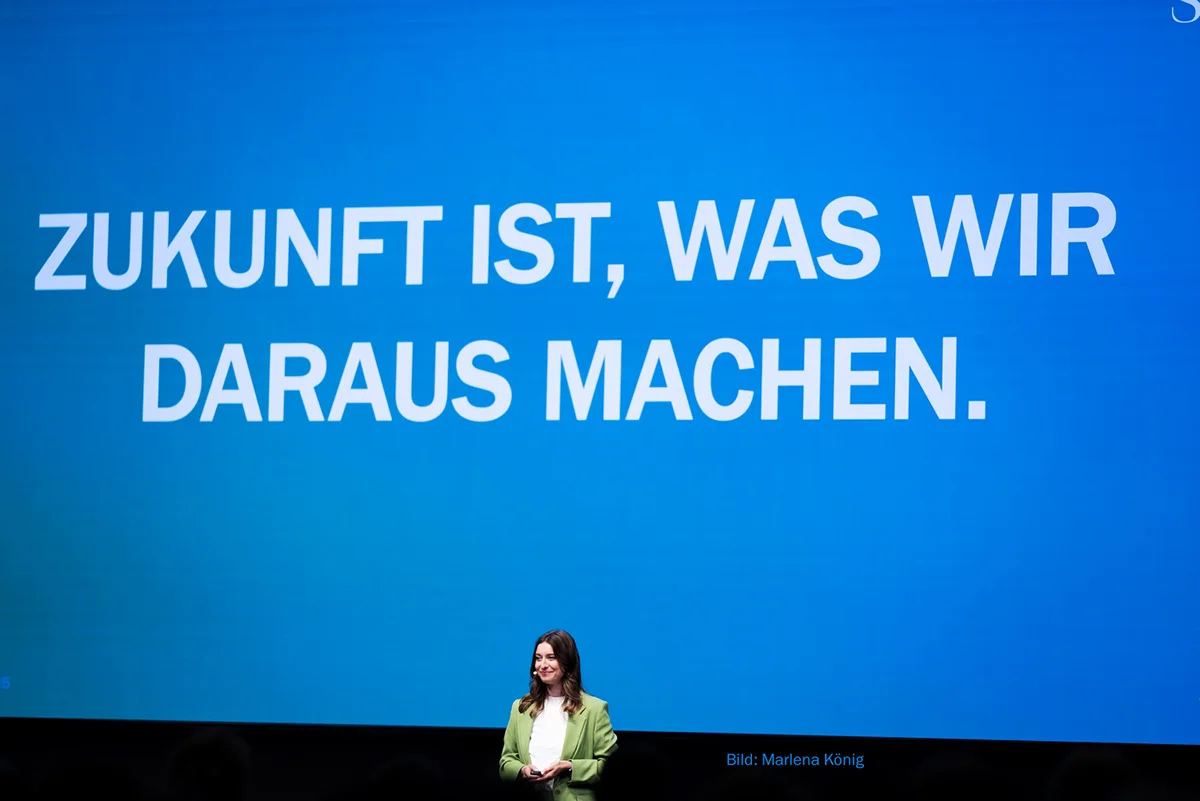
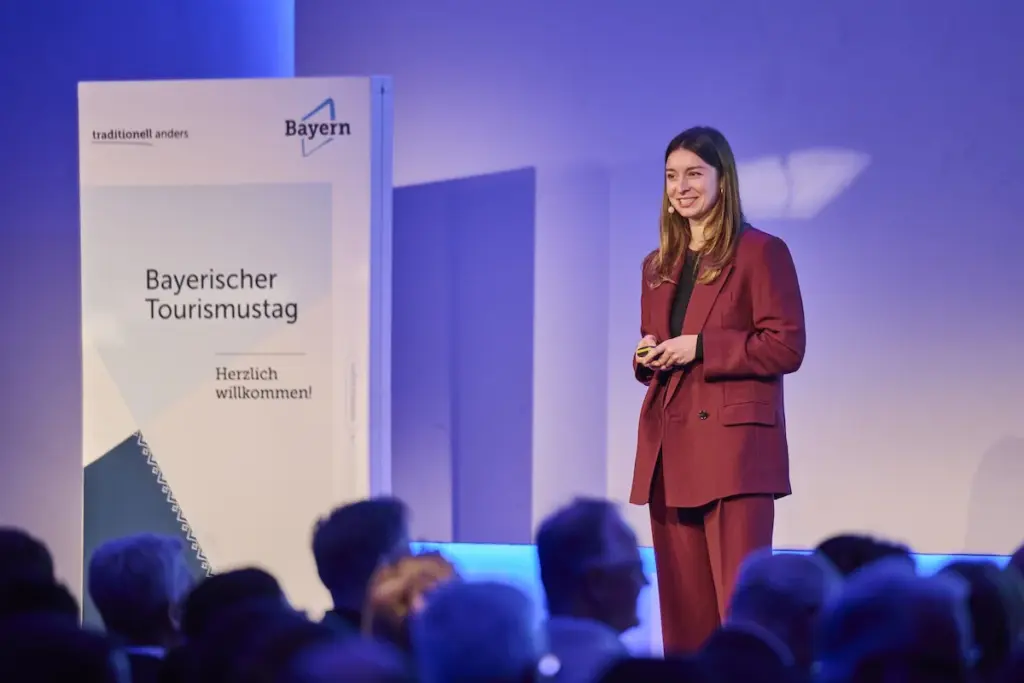
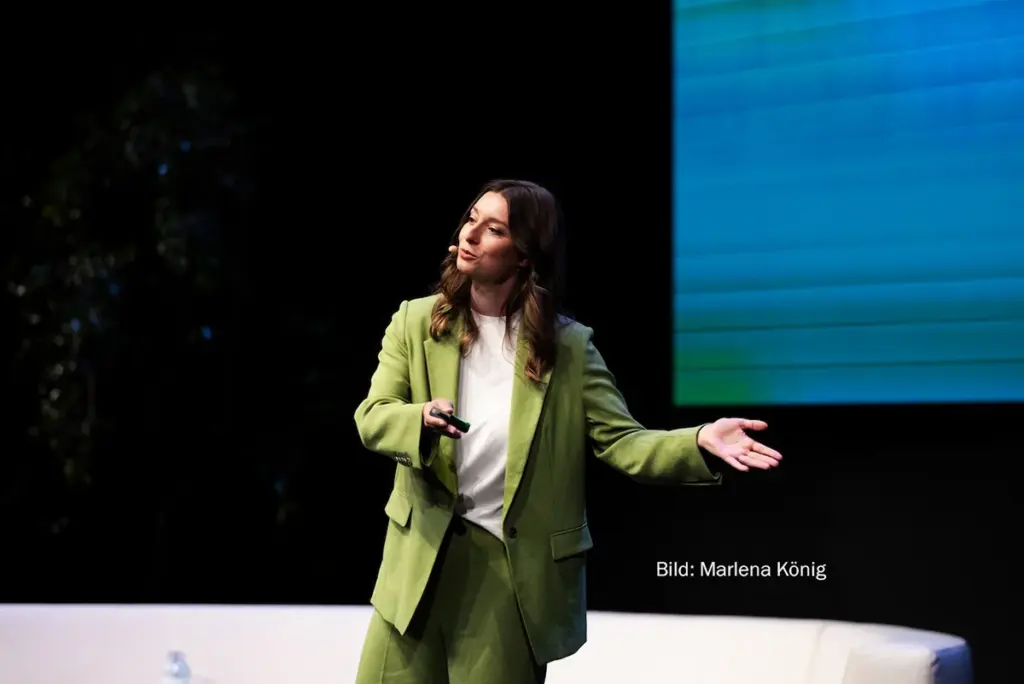
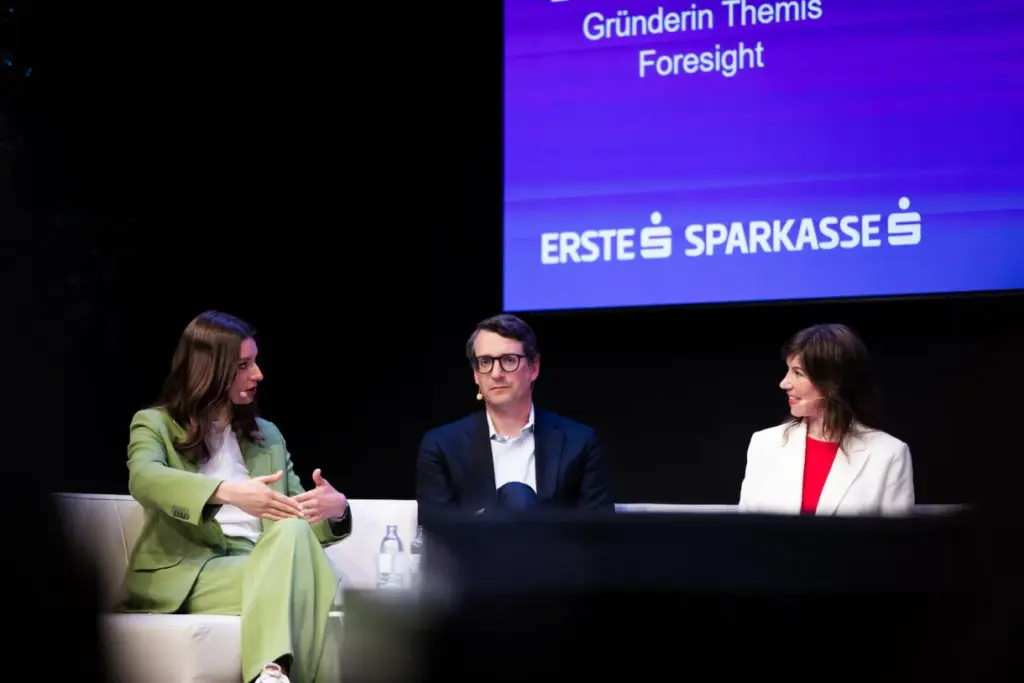
Keynote Speaker - Carina Stöttner

Carina Stöttner ist viel gebuchte Keynote Speaker, CEO und Gründerin der Futurewise Company.

Als gefragte Rednerin, darunter beim Handelsblatt, Google, Otto, internen Mitarbeiter-Events oder großen Verbänden, bereitet sie ihre Themen zielgruppenspezifisch auf. Dabei spricht sie über Themen wie die Zukunft der Industrie, Gesellschaftsthemen, zukünftige Konsument:innen oder darüber, wie Unternehmen Zukunftsdenken lernen können und mit den vielen Unsicherheiten in der Welt umgehen lernen. Mehr zu ihren Themen finden Sie hier.

Ihre Perspektive auf die Welt

Schon als Kind wollte sie die Welt aus verschiedenen Blickwinkeln betrachten – als Astronautin, um sie von oben zu sehen, oder als Autorin, um sie durch die Augen anderer zu beschreiben. Diese Makro-Perspektive prägt sie bis heute. Sie studierte Kommunikationswissenschaften und Soziologie und konzentrierte sich früh auf interdisziplinäre Forschung. Drei Jahre bevor ChatGPT erschien, führte sie Interviews mit Chatbots und untersuchte, wie Kommunikation mit KI Gesellschaft verändern könnte – damals ein Nischenthema, das sie als hochrelevant für die Zukunft einschätzte.

Zweifache Gründerin

Folgerichtig führte ihr Weg in die Zukunftsforschung. Mit 27 Jahren war sie Mitgründerin von Themis Foresight und baute den Thinktank zu einer der führenden europäischen Adressen für Zukunftsforschung auf. Statt Zukunft vor allem zu analysieren und zu beschreiben, wollte sie sie konsequent in unternehmerisches Handeln übersetzen – und gründete in der Folge die Futurewise Company. Ihr Ziel ist es, europäische Unternehmen handlungsfähig zu machen – nicht trotz Unsicherheit, sondern mit ihr. Resilienz versteht sie dabei nicht defensiv, sondern als Grundlage für neues Wachstum: nicht als Rückzug auf das Bewährte, sondern als bewusste Öffnung für neue Zukünfte und tragfähige Geschäftsmodelle.

Futurewise begleitet Führungsteams dabei, genau diese Räume zu öffnen – für radikales Denken, fundierte Entscheidungen und eine Wirtschaft, die ihre Zukunft wieder selbst gestaltet.

Internationale Erfahrungen und Bühne

Ihre Laufbahn führte sie früh in Vorstandsetagen und rund um den Globus. Durch einen Doppelmaster in Deutschland und Italien, Wohnorte in ganz Europa sowie die Arbeit mit internationalen Teams entwickelte sie ein feines Gespür für globale Dynamiken und interkulturelle Kommunikation. Das Thema Zukunft bringt sie heute in Vorträgen und Panel-Diskussionen auf internationale Bühnen und eröffnet neue Perspektiven auf Zukunftsplanung, Führung sowie wirtschaftlichen und gesellschaftlichen Wandel. Weitere Informationen zu ihrem Speaking-Profil finden sich bei Premium Speakers.